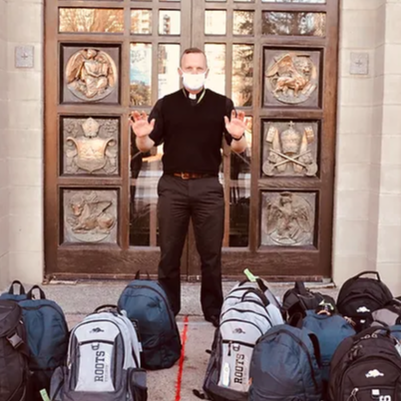
 Human trafficking is a distressing and complicated issue that affects people all over the world… sadly it’s not something new. The Calgary Catholic School District has been increasing their awareness and building strategies to combat human trafficking by preventing our youth from being groomed and exploited, growing in our ability to identify potential vulnerable youths, and providing supports to those who are victimized. The prevention strategy starts in our Religion and Wellness courses where we teach our students about the gift that God has given us in the form of our bodies and that these bodies deserve to be treated with the utmost respect. We also talk about what healthy, good relationships look like. As we move upward in our grades, we do explore family life in terms of anatomy and discuss the concept of consent. Having students understand their worth and value as a child of God creates the understanding that they do not deserve to have anything but love in their life and if it is not love, it should not be tolerated. There are still students who have been traumatized in their life and this trauma may lead to a greater vulnerability of being exploited. Make no mistake, the traffickers groom their victims with great sophistication where the young person may not even realize until it is to late what is happening and feels trapped and ashamed by what they have involved themselves in. Calgary Catholic is proud to promote the education course on the Not In My City to help educators and staff understand signs of potential trafficking victims. When we find a potential youth at risk of being trafficked, being trafficked or have ben trafficked, we work to support them and their families through targeted supports that may include supports though a mental health professional such as a psychologist or District Wellness Worker, collaborative supports with agencies outside of CCSD and creating a learning environment where the student feels safe enough to learn and brave enough to try. One of the examples of ways that we raise awareness and help to support victims is by supporting IWIN (I’m Worth It Now). This wonderful organization is based out of St. Michael's parish in Calgary, and has strong spiritual connection and support through the Diocese of Calgary. They have two projects that schools in Calgary Catholic can participate in. The first is building backpacks that are provided to survivors of human trafficking who are entering a wrap-around program to support them emotionally physically and spiritually. The backpacks contain brand new items such as a change of clothes, toiletry items, a handwritten car of encouragement and a bracelet. A matching bracelet is given to a volunteer prayer warrior to support the survivor through prayer. The second is an awareness prayer service called the Red Sand Prayer Service where red sand is spread through the cracks in a sidewalk or tarmac to bring awareness to the atrocity of human trafficking. St. Josephine Bahkita school, whose patron saint of victims of human trafficking, participates in the Red Sand Prayer Service every year on their feast day.
The Calgary Catholic School District works hard to provide learning environments for all of our students that are safe enough for them to learn in and help our students become safe enough to try new adventures in their learning. Human trafficking is one way that a student can be victimized by those who look to exploit the vulnerable. The district works hard with families and parishes to create safe environments for students to experience success. We are blessed to have the opportunity to serve those who need our help.
3 Comments
 Residents of Nagorno-Karabakh were forcibly displaced into Armenia, October 2023, as a result of Azerbaijan's occupation. CNEWA has supported refugees in the Middle and Near East since 1926. Photo: Shant Khatcherian/CNEWA Refugees are deeply connected to both our Christian tradition and the daily realities of our modern world. Whether you’ve come to understand this through the Church’s teaching, the more caring forces in our contemporary culture, or something as simple as the story of the Holy Family fleeing King Herod during the Massacre of the Innocents, most of us appreciate the plight and importance of refugees in world history. Today, like yesterday, refugees remain on the move in search of safety, wellbeing and a new life. In regions where we serve, both with our Church partner and colleagues, the desperate cry of refugees and migrants echoes through the alleys and valleys, conveying their deep desire to not only survive, but to retain a remnant of hope for a better tomorrow. In almost all areas of our work, we hear their stories daily. It is during the crucial first moments of displacement that their cries are the loudest, but their need for essential services, goods and pastoral support almost always extend beyond months, and all too often years. On this day, when we call to mind refugees around the world, we think of faithful stewards like Sister Bernadette D’Hauteville and the Franciscan Missionaries of Mary who have been present in Aleppo, Syria since 1914. Before the outbreak of conflict in 2011, their convent was equipped to receive aging sisters from across the region. Before the civil war, the community counted some 23 sisters. Today, four remain. Originally from France, Sister Bernadette spent some 50 years living in various places throughout the Middle East, but returned to Aleppo in 2014 to serve those needing refuge. In a recent exchange with CNEWA, sister reminisced how during the war she had a very important role to play in welcoming everyone – without regard to the circumstance or situation. Millions of people, including many Canadians, have been steadfast in remembering heroes like Sister Bernadette and have supported people like her and families around the world facing the devastating effects of conflict, poverty or other forms of disaster. Acts of charity delivered by us and our partners are all the more effective and expansive thanks to the ongoing generosity of Canadian Catholics. Despite living in a post-pandemic world with its own difficulties, members of our Canadian Church have been faithful in giving of their love, prayers and financial support to those who need it most. As we mark this day in union with humanitarian and faith-based organizations around the world, CNEWA Canada will continue standing in solidarity with many people in need – feeding them when they are hungry, bandaging them when they are injured and sheltering when they have no place to call home or at risk of losing hope. This work is a direct response to the call of Jesus Christ in Matthew’s Gospel, where we are called to feed the hungry, clothe the naked and visit the sick. As an instrument of healing and hope, as per our mission, we bind the wounds of a broken world. Quietly, prayerfully, joyfully, we live out the great command to “love one another.” May we continue to support refugees of all stripes and be great witnesses of love and care for those in need. Our work is incredibly important and life-giving, yet far from over. Why? Because every day is World Refugee Day. Written by Dr. Adriana Bara from CNEWA Canada.
Volunteering Opportunities at Calgary Remand Centre
Volunteering Opportunities at Calgary Correctional Centre
As with any volunteering opportunities, we require a Vulnerable Sector Police Information Check (VSPIC), the completion of the Praesidium Academy sexual abuse prevention training, and the agreement to the Code of Pastoral Conduct and Accountability for Volunteers. This information will be provided to you after submitting your application.
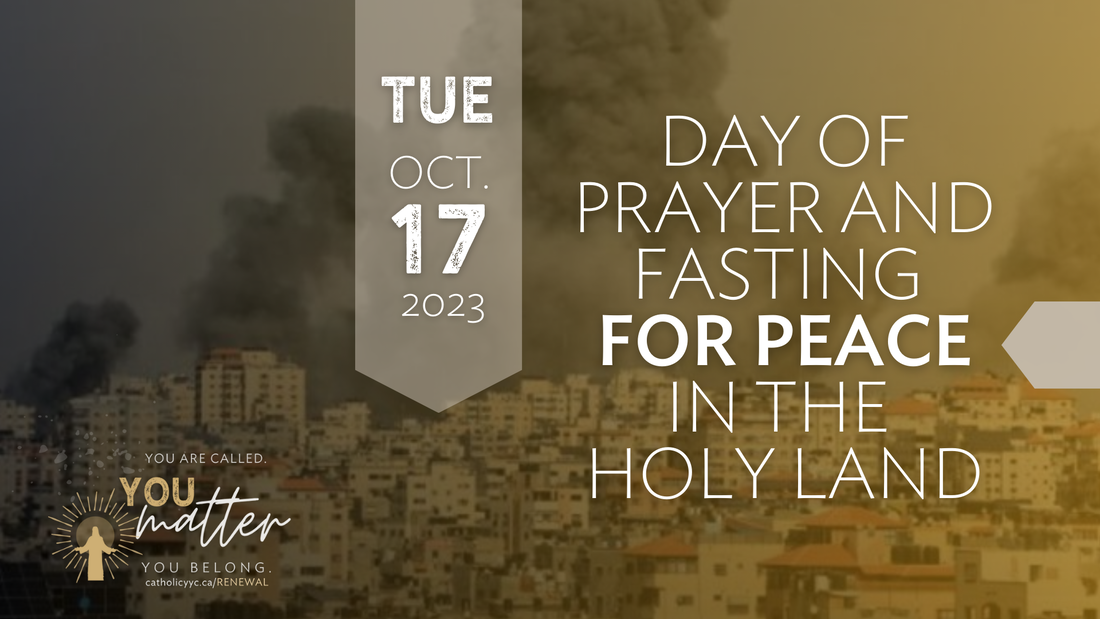 As we witness the humanitarian catastrophe in the Holy Land with hearts that cry out to God for an end to war and violence, the Latin Patriarch of Jerusalem, Cardinal Pierbattista Pizzaballa, has called for a day of fasting, abstinence, and prayer for peace and reconciliation. Therefore, Bishop McGrattan is calling on the Diocese to respond to the request of the Cardinal by designating Tuesday, October 17 as a Day of Prayer and Fasting for Peace in the Holy Land in the Diocese of Calgary. “We ask that on Tuesday, October 17, everyone hold a day of fasting, abstinence, and prayer. Let us organize prayer times with Eucharistic adoration and with the recitation of the Rosary to Our Blessed Virgin Mary. Although most probably in many parts of our dioceses, circumstances will not permit large gatherings, it is possible to organize simple and sober common moments of prayer in parishes, religious communities, and families.” - Cardinal Pizzaballa | Read full letter Ways to pray as an individual, with your family and the parish community….
Read: Statement by the Most Rev. William T. McGrattan, Bishop of Calgary and CCCB President, to the Catholic Faithful in Canada on the Recent Escalation of Conflict in the Holy Land - Read letter  The accelerated adoption of the Euthanasia law in Canada has thrown us into a troubling attack on the sanctity of life. Initially introduced by the Canadian Government to alleviate severe physical suffering, the law is now being suggested as a method to "manage" mental health conditions. Bill C-7, an amendment to the Criminal Code relating to medical assistance in dying (MAiD), proposes expanding eligibility for MAiD by removing the requirement that a person's natural death must be reasonably foreseeable. This could allow individuals not nearing the end of their lives, including those with mental illnesses such as depression, to avail themselves of this provision. Since its adoption, over 31,000 medically assisted suicides have occurred in Canada - a number projected to rise significantly with the planned expansion of the law to include those suffering from mental health conditions. However, mental health illnesses are highly treatable. Symptoms can be managed, and lives can be lived to the fullest. Broadening access to MAiD is not the solution, particularly when our priority should be to choose life over death. We must ensure all efforts are taken to protect the most vulnerable from medically assisted premature death, which can be prevented with adequate treatment and care. We should ensure that those suffering from mental illness are treated medically, not through assisted dying. Conservative MP Ed Fast has brought forward a Private Members Bill C-314 to rescind the government’s decision to expand Canada’s assisted suicide laws. The bill asserts that medical assistance in dying should not apply to persons suffering solely from mental illness. The vote will take place by members of parliament on October 18th. As the CCCB urges all the faithful in their Open Letter in May 2023: “We encourage individual Catholics and their families, faith communities, Catholic healthcare professionals and any other people of good will to continue courageously and unwaveringly to witness to life, to tend to and accompany the sick, to resist pressure to support or participate in ‘MAiD,’ and to pray that our law makers may see the harm in what they are permitting to take place.” Let's continue to pray for those living with mental health challenges and illnesses and those who care for them, that God may strengthen them in hope, and that they may find the support they need from family, healthcare professionals, faith communities, and others. The Catholic Women's League (CWL), a national organization of Catholic women, emphasizes the sanctity of human life as one of their key missions. Amidst the pressing social justice issue of inadequate mental health and palliative care services in Canada, and the critical concern surrounding MAiD, they are urging members and the faithful to take action and reach out to their Member of Parliament, requesting support for Bill C-314. With the vote scheduled for October 18th, time is critical. Please share this vital message with your family and friends.
Notes:
Reading materials:
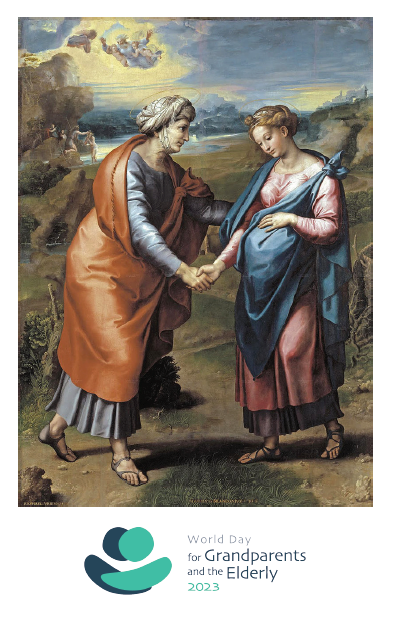
Everlasting joy: Serving & Listening in the Spirit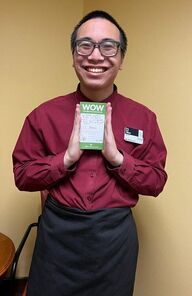 Over the past year or so, I have been working as a waitstaff member at a retirement home in the northwest Calgary. It is a quaint place for independent seniors who do not require extensive care. My most treasured part about this job are the interactions I have with the residents at the retirement home. This, I believe to be a twofold interaction as I have noticed that the residents seldom receive family visits. The residents have a wealth of insights and wisdom to share, and what I commit to bring them in return is an infectious joy to hopefully brighten their days. I would not have chosen this job if I had not recognized the primary commitment to bringing joy. I have my own experiences with my grandparents and my faith to thank for that; because I cannot imagine how isolating it could feel to live here without much social interaction. Interestingly, I learned from a group of residents about a differing approach taken by another waitstaff member. Residents were advised to spend their free time in their suites rather than the all-day café near the dining area, which is typically designated for leisure. This baffled me. What could possibly lead one to believe that people, particularly seniors, would prefer to be cooped up away from everyone for days on end. These experiences further bolster my efforts to provide the most genuine and respectful service I can give. This primarily comes down to the smaller things. If there’s one thing the elderly desire from a service, is to feel that they are listened to. I cultivate this through a multitude of smaller actions, such as not just remembering and calling residents by their names; but also knowing their drink choices at each mealtime, as well as any allergies or food preferences. I make a point to acknowledge all of these preferences or requests when serving them; and I am always open to conversation. At the end of the day, I am here at this job to serve the elderly the best I can. I am drawn to this work, feeling motivated by the Holy Spirit to bring joy wherever I go and to whomever I interact. As we approach 2023's World Day for Grandparents and the Elderly, I aim to continue dedicating my service both to God and to the senior residents in the retirement home. I pray for the Holy Spirit to help me continue to share God’s love and joy with the elderly.
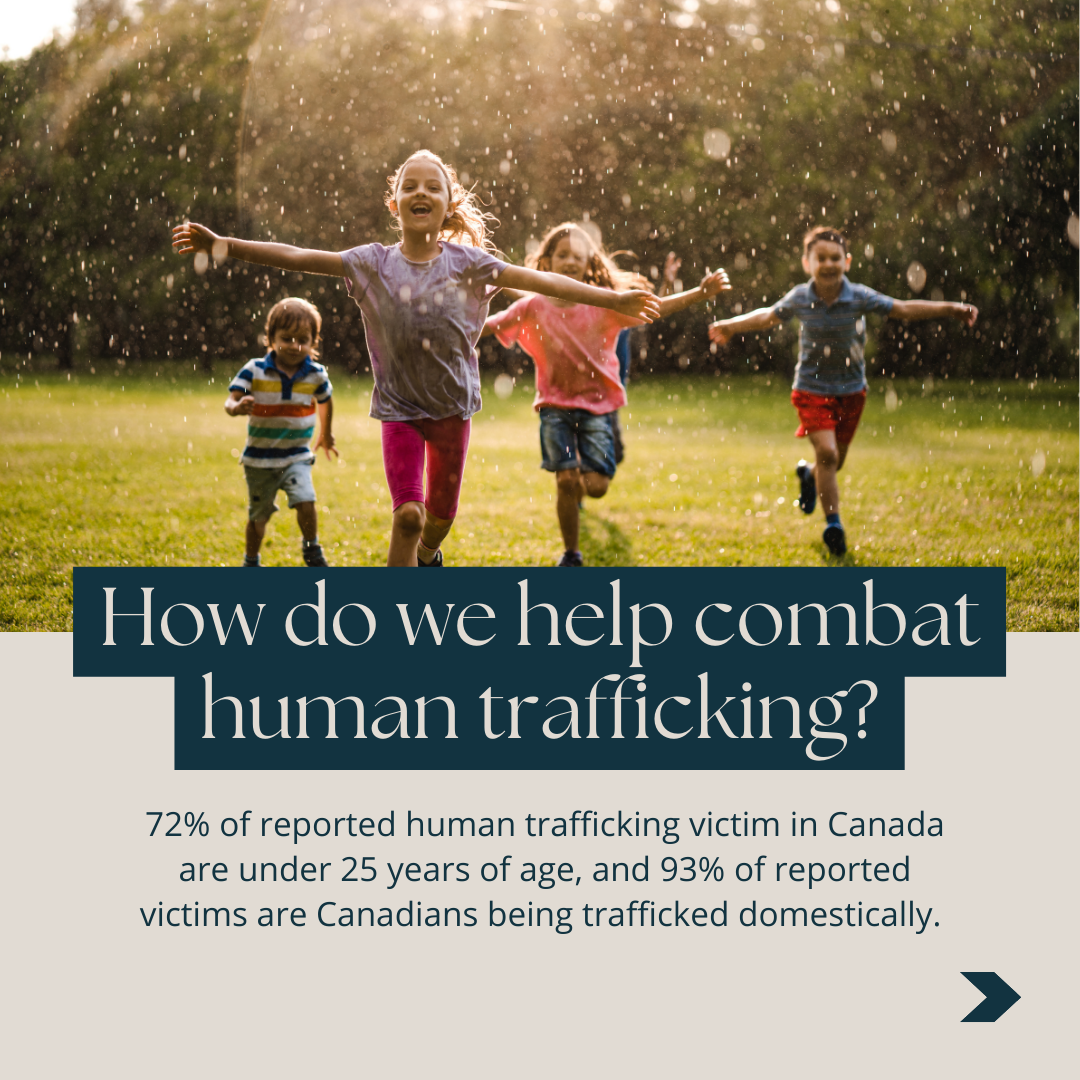 Human trafficking is a highly-organized crime that involves exploiting humans for forced labour, sexual slavery, and commercial sexual exploitation. It is also one of the fastest growing crimes in Canada. 72% of reported human trafficking victim in Canada are under 25 years of age, and 93% of reported victims are Canadians being trafficked domestically. (Source: #NotInMyCity). Assessing the national and global reach of human trafficking is a challenging task due to the covert nature of these crimes, the unwillingness of victims and witnesses to approach law enforcement, and the practical challenges of identifying victims. While no one is immune to falling victim, some individuals face a higher risk. The key to tackling this issue lies in our collaborative efforts and unity. To safeguard your children from this crime, we can learn the signs of trafficking and talk openly about the risks with them. Honest discussions can make a big difference. Here's what we can do to help end human trafficking:
Here are several local, national, and international initiatives diligently working towards eradicating sex and child trafficking.
Videos & Courses
Courses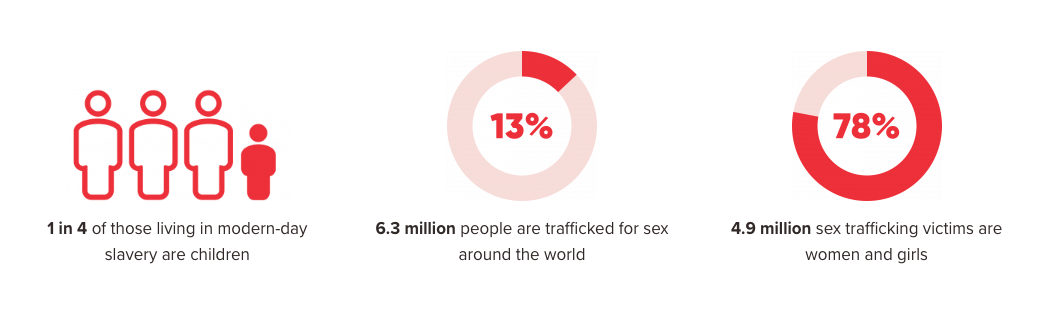 Source: aimfree.org
 Dear Brothers and Sisters in Christ,
In preparation for the upcoming provincial election, the Catholic Bishops of Alberta wish to encourage all members of the Church to engage in the electoral process. By means of this letter, we offer to our Catholic faithful a reminder of important principles and concerns, which stem from the social doctrine of the Church, to guide the discernment of choices that accord with the Gospel’s vision for the right ordering of society.
Please join with us in prayer for those elected to public office. They are assuming a heavy responsibility, often at great personal sacrifice. May they be granted the strength and wisdom to govern in accord with the precept of charity in service of the life and well-being of everyone. Yours sincerely in Christ, Catholic Bishops of Alberta Most Reverend Richard W. Smith, Archbishop of Edmonton Most Reverend William McGrattan, Bishop of Calgary Most Reverend Gary Franken, Bishop of St. Paul Most Reverend Gerard Pettipas CSsR, Archbishop of Grouard-McLennan Most Reverend David Motiuk, Bishop of the Ukrainian Eparchy of Edmonton 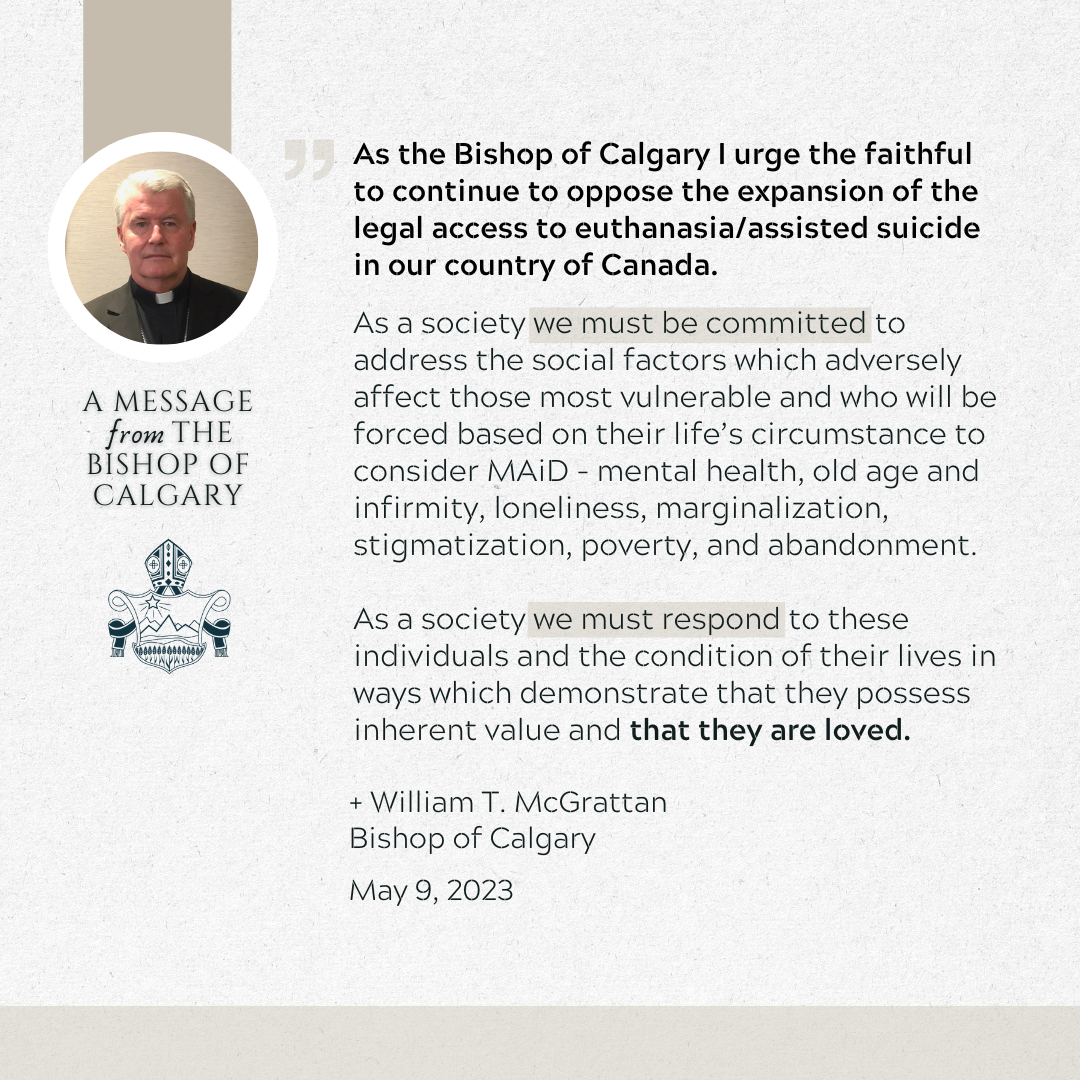 Together with the Canadian Conference of Catholic Bishops (CCCB), Bishop McGrattan is urging the faithful to continue to oppose the expansion of MAiD in Canada. The CCCB has just issued an Open Letter to the Government of Canada and a Message to the Catholic Faithful on May 9 re: Permitting Persons Living with Mental Illness to Access Euthanasia/Assisted Suicide. We ask you to share the Bishop's message with your friends and family:
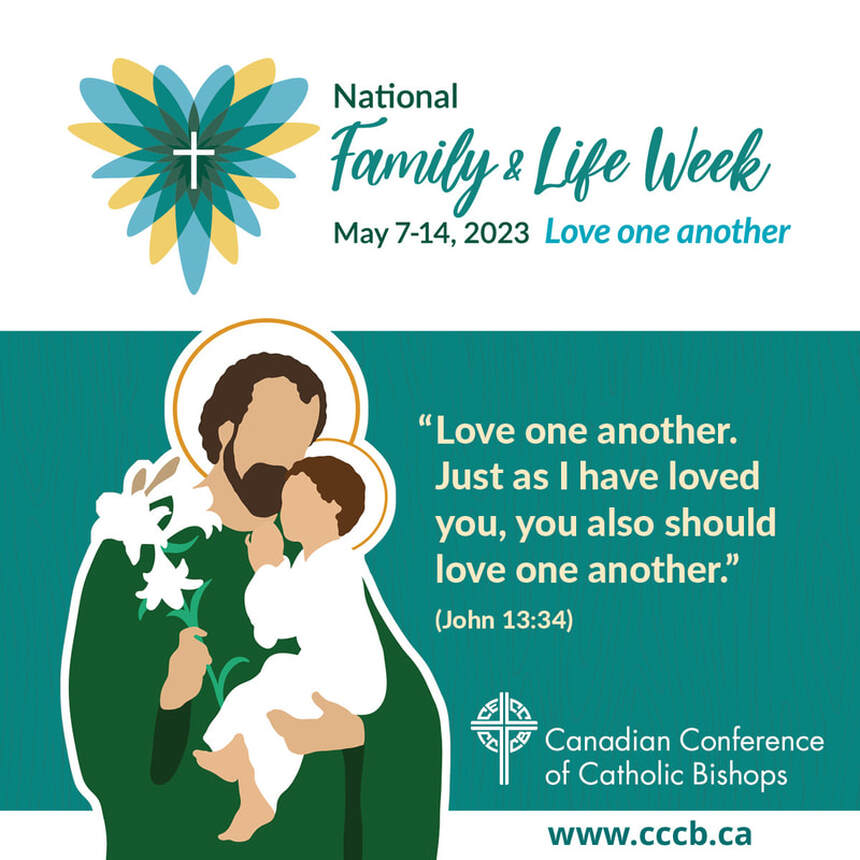
Let us spend the National Week of Family and Life (NFLW) 2023 united in prayer, reflection, and action, demonstrating our active support for family and life. Indeed, families are “guardians of life” when we love one another within our families and in wider society when we show kindness toward and care for the vulnerable and marginalized.
Note: Day 1 can begin anytime! We want to ensure everybody has the opportunity to join in and take part in this wonderful experience. Don't worry if you missed the start of NFLW, you can join in and start participating in the daily prayers and activities from any day.



Source: National Life & Family Week Daily Prayers & Activities, CCCB, 2023
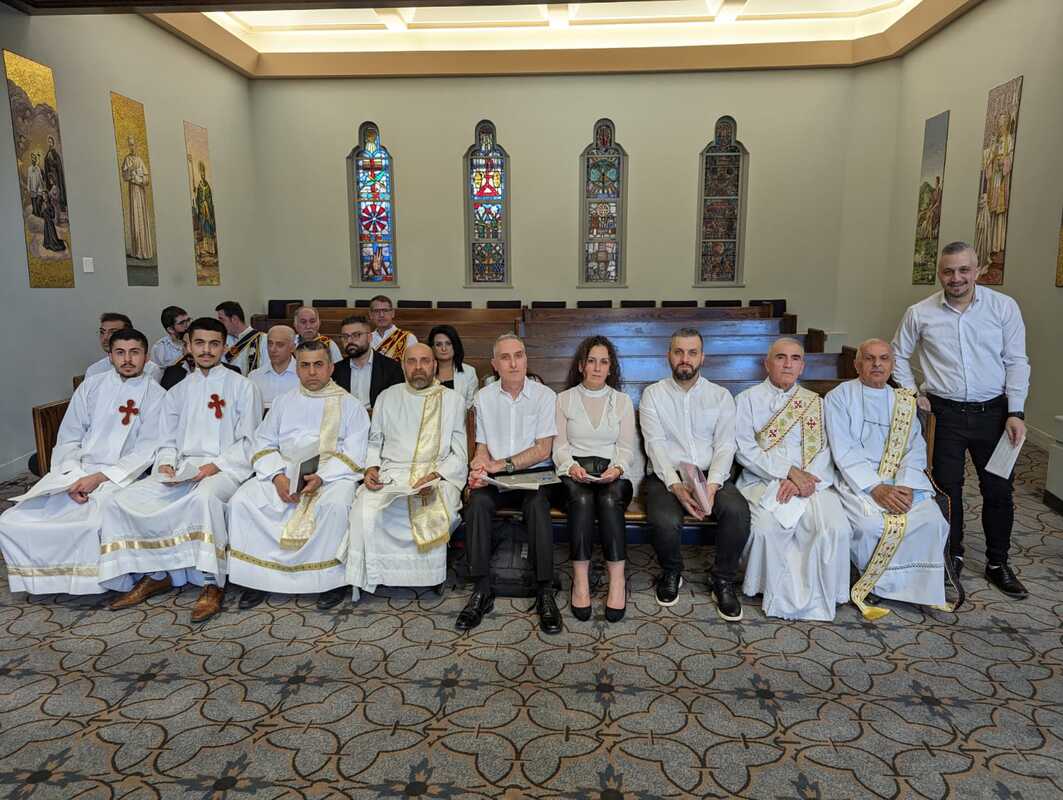
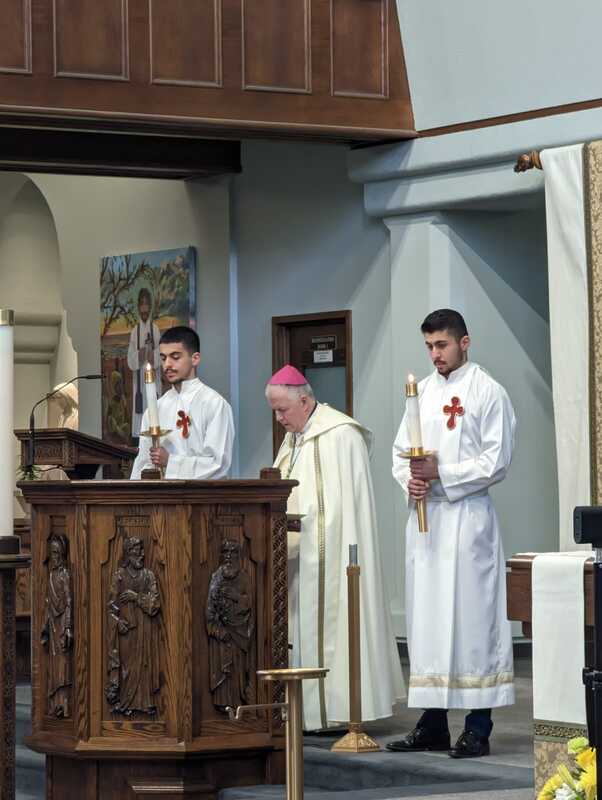
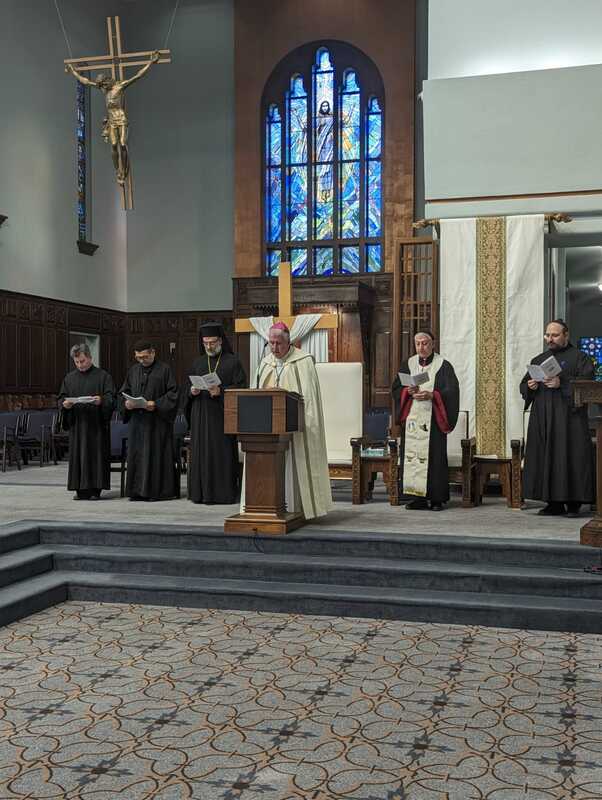
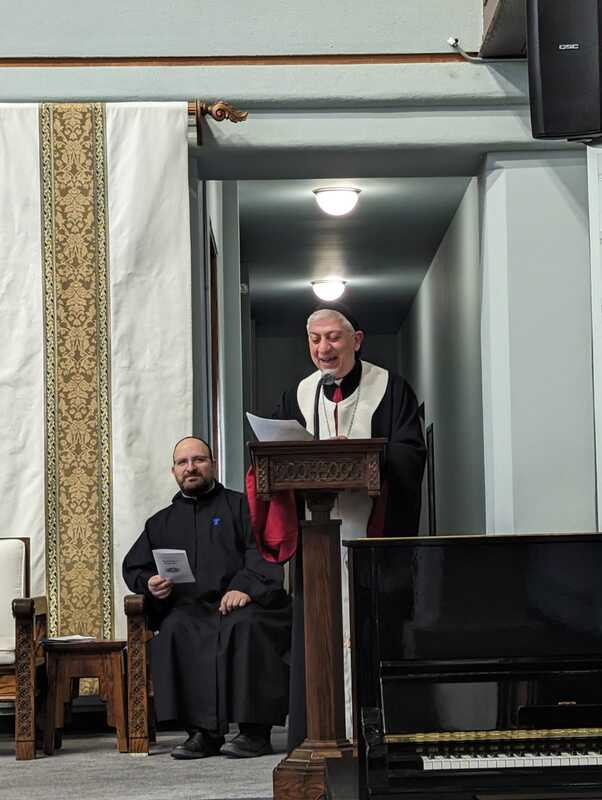
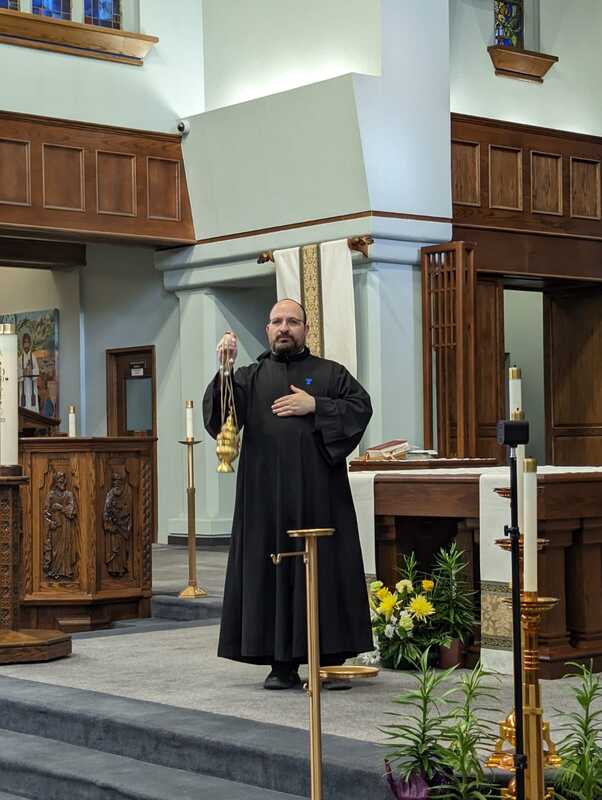
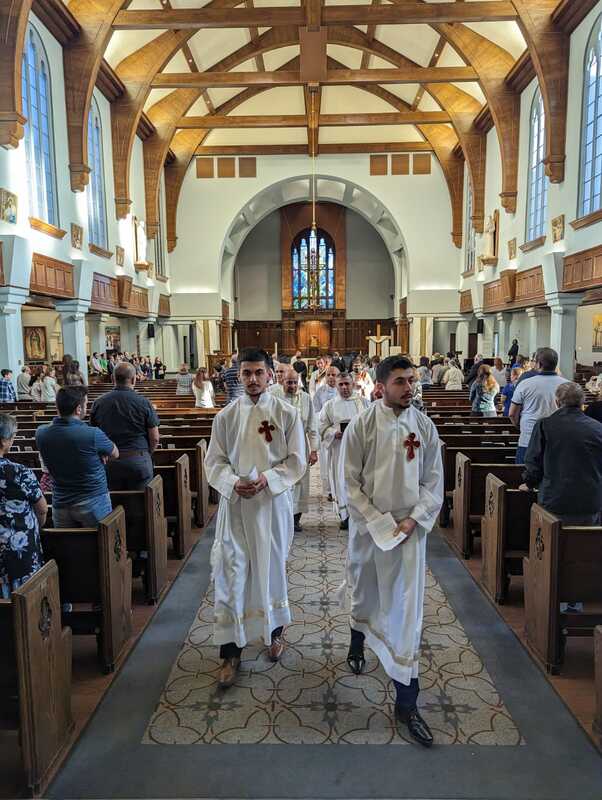
A beautiful evening of prayers for Syria was held on Friday, May 5, 2023 at St. Mary's Cathedral. Archbishop Joseph Tobji from Aleppo, Syria, Bishop McGrattan, priests, deacons, and faithful from the oriental churches in Calgary and the Diocese attended the event. In addition to the ongoing conflicts, people in Syria are also facing the aftermath of a devastating earthquake and the tragic consequences of the COVID-19 pandemic. Despite these immense challenges, the people of Syria are bravely rebuilding their lives. We express our deep appreciation to everyone who participated and prayed with us for our brothers and sisters in Syria. A special thank you to Fr. Daniel Fares, the chief organizer, volunteers and staff of St. Mary's Cathedral for the beautiful reception after the prayers. Let us continue to keep the people of Syria in our thoughts and prayers.
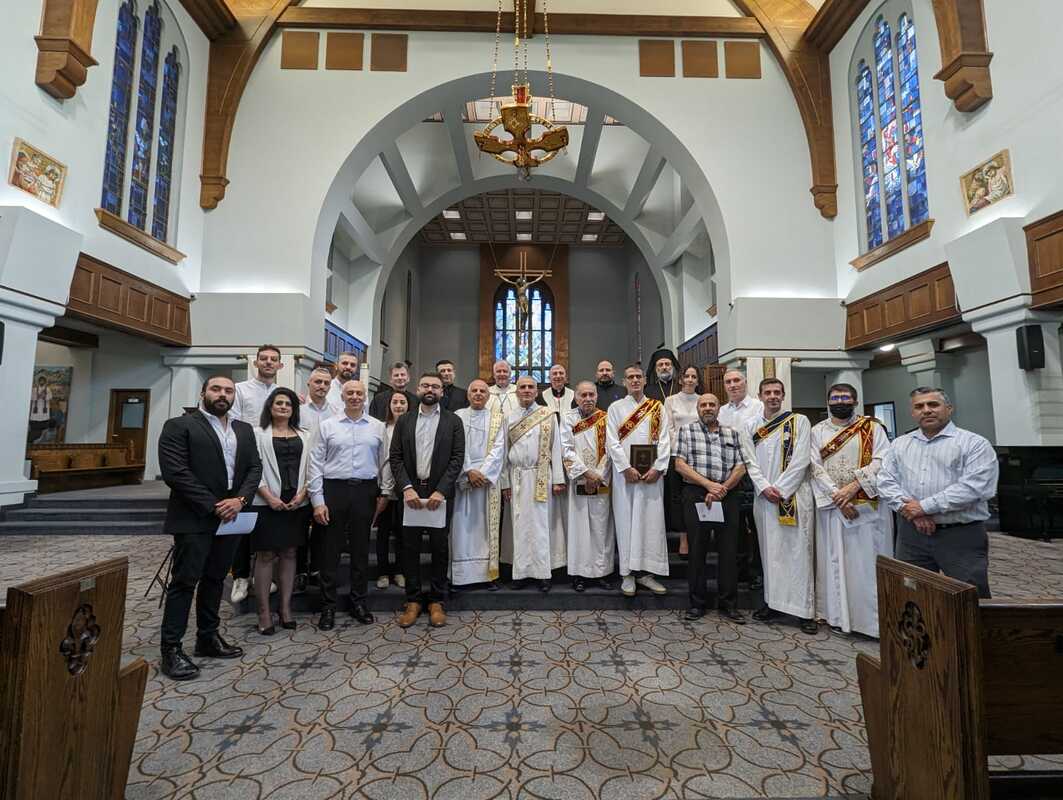
Photos and videos courtesy of Our Lady of Peace Maronite Church and Office of Communications.
More photos are available here.
Glory be to Jesus Christ!
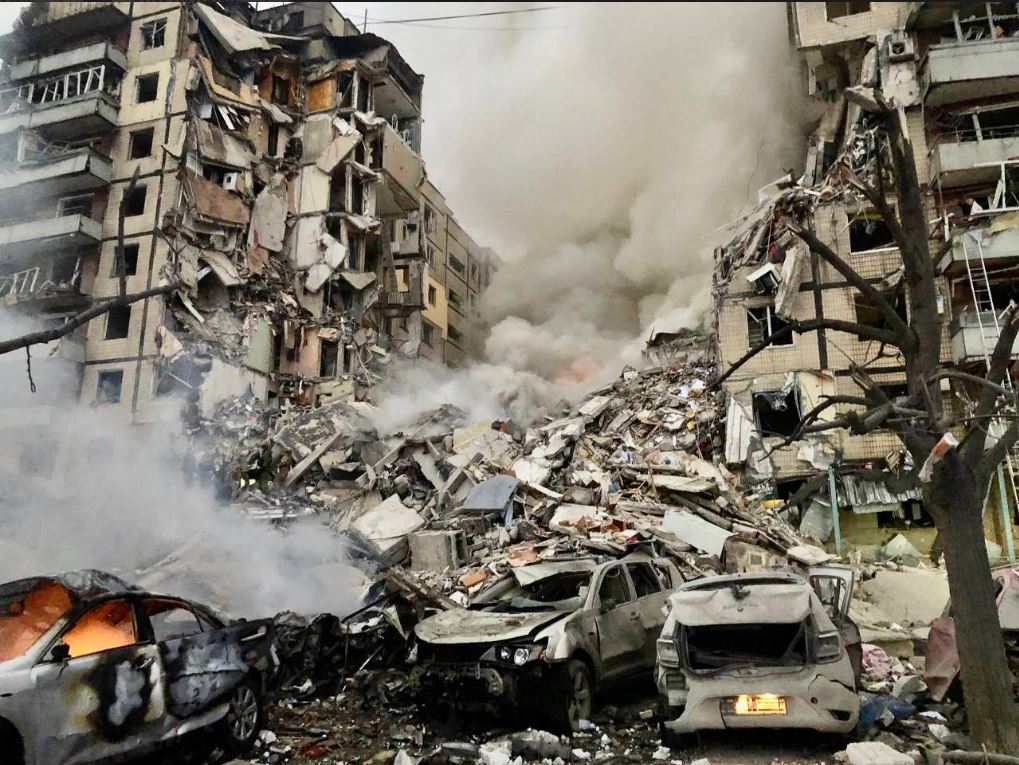
Dearly Beloved in Christ! Today, on our calendars we mark a year since a new stage of the Russian-Ukrainian war began with brutal cruelty and destruction, cynicism and falsehood. Every day of the past year has been a repetition of February 24, adding to the bitter statistics of losses and multiplying the grief experienced by many. Thousands of innocent men, women and children have lost their lives; many have been tortured, held in prisons and camps, and forcibly deported. Millions are forced to wander around the world, having lost everything, seeking refuge far from their homes. Many cities and villages have been erased from the face of the earth, leaving only traces in the history and memory of those who lived there. Countless are the deep emotional wounds from the losses, tragic memories, and longing for relatives, inflicted by the war on those who survive and are suffering - especially the children! This war is not limited to the context of armed battles, but also occurs in the struggle for consciences, spiritual values and ideals with all the evils that war entails. Most importantly, it requires from everyone a clear choice for good or evil. The war challenges us to demonstrate our love for Ukraine, for its God-given freedom, political and human rights. War challenges the very sincerity of our love for our neighbor and the Lord God. Every Ukrainian in and outside of Ukraine is called to discover a deeper awareness of his or her national, political and ethnic identity. The enemy are those who want to stop this process and plant other values which contradict the truths of the Christian faith, the foundations of our spirituality and our Ukrainian identity. And they are looking for all kinds of insidious ways to achieve their goals. We, the Ukrainian Catholics in Canada, call upon all people of good will to steadfastly resist the spread of the evils of war, the killing of innocent people, and the destruction of the nation of Ukraine. Let us draw our strength from the Lord at all times in our struggle (cf. Ps. 26:1). As the Apostle Paul says , let us gird ourselves with the belt of faith and take the armor of justice, the shield of faith, the helmet of salvation and the spiritual sword to "resist the wiles of the devil" and "against the principalities, against the authorities, against the rulers of this world of darkness, against the spirits of malice in the heavenly spaces" (Eph. 6:11-12). Fervent and constant prayer to the Lord is our weapon against which enemy forces are powerless, and with it we draw the grace of God. We pray not to succumb to feelings of hopelessness and oppression, excessive worries and cares (cf. Ps. 137:7). Let us take the psalmist's words, "Your word is a lamp to my feet, and a light to my path" (Ps. 118:105) closer to heart and listen to God's voice in our lives. The word of God teaches us goodness, truth, love, understanding and ability to make right decisions that are sometimes very difficult, especially during times of deep tragedy and loss. In His word, we will find God who is near to us in solidarity, offering us comfort and healing. Let us continue our works of mercy for the needy in Ukraine and those who seek refuge here in Canada, as a humble manifestation of our sincere faith and for the greater glory of God. In doing so, we share the time and talents with which the Lord has blessed us, knowing that everything will return a hundredfold. By giving temporal goods now, we will receive eternal goods in the future. In solidarity and compassion with our brothers and sisters in Ukraine, who continue to suffer from the lack of food, water and other basic necessities of life due to the ongoing war, let us renew our practice of fasting and abstinence to remind ourselves of the many blessings we enjoy in our peaceful, daily lives here in Canada. More than ever, we need to support each other through prayer, kind words and good deeds. A person who receives something through you will thank the Lord and praise Him always. "Let your light so shine before others that they may see your good works and glorify your Heavenly Father" (Mt. 5:16). The outcome of this war is crucial and will have global significance and consequences. We pray for victory, which will be realized only when we put all our efforts together. Let us unite, pray, and work for the common good! Let this Lenten season be an opportunity to reach new spiritual heights and to better ourselves so that we can carry out our part in bringing to an end the tragedy of war. May God bless the Ukrainian people both in their homeland and throughout the world. May He grant them the strength of a strong Christian faith, of enduring good health and the support of a multitude of people of good will. May He grant victory over evil and peace to Ukraine! Sincerely Yours in Christ, + Lawrence Huculak, OSBM Metropolitan Archbishop of Winnipeg Apostolic Administrator of Saskatoon + David Motiuk Eparchial Bishop of Edmonton Apostolic Administrator of New Westminster + Bryan Bayda, CSsR Eparchial Bishop of Toronto + Andriy Rabiy Auxiliary Bishop of Winnipeg 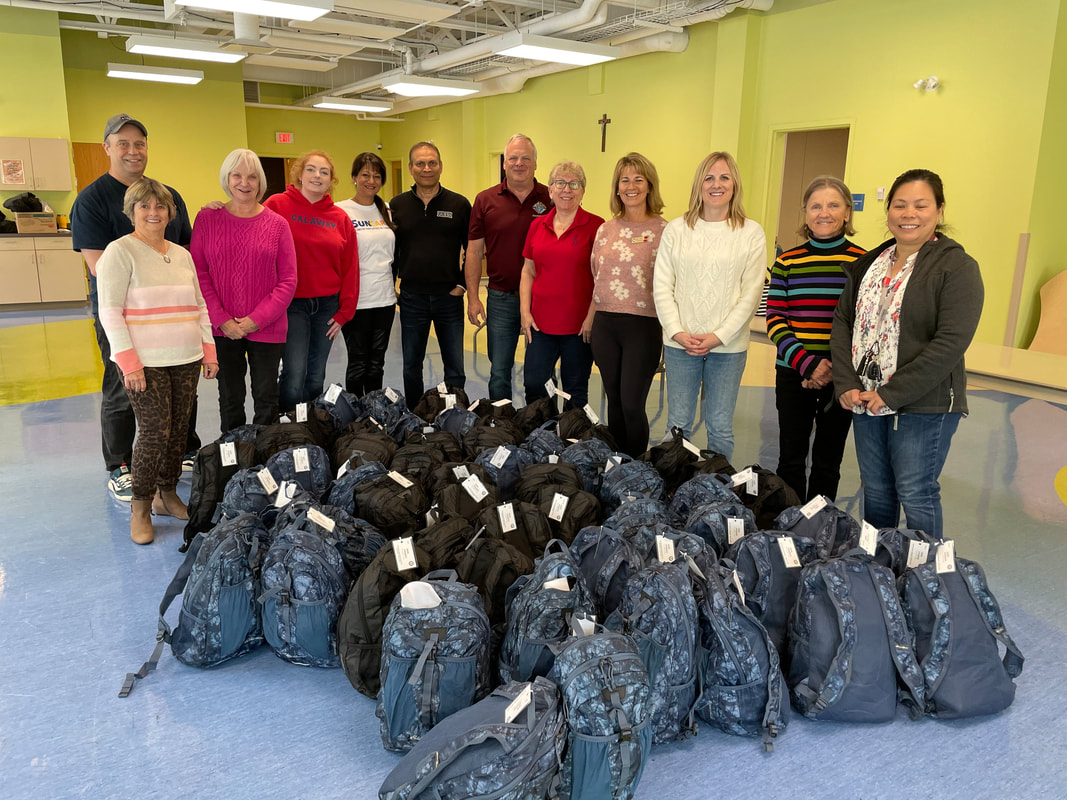 IWIN Backpack Assembly Day, October 22, 2023 “It started when a friend of mine told me about a backpack program for human trafficking survivors in Florida.” shared Kristin Fahlman, a parishioner of St. Michael's in Calgary, “I thought it was interesting, but didn't think about it again for several years.” It wasn’t until that one fateful evening when she attended a movie screening organized by the Catholic Women’s League at her church. It wasn't just any film; "Over 18" documents society's damage caused by pornography industries across North America and beyond. “On the way to the screening, God reminded me of the backpack program in Florida. And that I should start a similar program here in Calgary.” shared Kristin. After the movie screening, Kristin tried to speak to Paul Rubner, who had been invited as an expert local speaker at the time, but there were just too many people who wanted to do the same. So she went home, trying to put it out of her mind. But God persisted. Shortly after, Kristin was invited to a human trafficking workshop and, seemingly by divine intervention, her normally packed schedule was free. At the workshop, she again noticed Paul, who provided a presentation on the issue of human trafficking in the Calgary and Alberta context. She decided then that if he was available at the end of the workshop, this was the person she needed to speak with. "When I explained my idea, Paul was extremely enthusiastic and, as it turns out, he was the key person in Calgary who would know how to implement a distribution system for the backpacks. He suggested involving the Catholic Women's League, a group I had just recently joined." What followed was a series of meetings and brainstorming sessions between Kristin, a lawyer with a passion for social justice and deep compassion for a segment of society that very few people were aware of, and Paul, at the time a human trafficking investigator who had spent the last decade working with survivors of human trafficking and exploitation. Paul had an understanding of the needs and issues faced by survivors, along with the social agencies that sought to help them - but he knew there was more that could be done. All that was required was a group, or individuals, that had a realistic understanding of the issue that he could lend his experience and advocacy to. “God has lined it all up for us every step of the way," said Kristin. Paul added, “We want survivors of human trafficking to recognize the strength inside of them and to realize that they are loved and accepted right in this moment.” Long story short, IWIN - an acronym for 'I'm Worth It Now' - was born in 2019 with the support of the Catholic Women’s League (CWL). This program's mission is to make an impact on those who are often forgotten: survivors of sexual exploitation and domestic sex trafficking. And over three years later, the need for their ministry has only grown. Their services now extend to non-profit agencies in two provinces - with a vision to expand even further. “The idea was to provide a tangible way to show trafficking survivors in Calgary, the vast majority of whom were born and raised in Canada, that people care and ‘nice things’ didn’t always have to come with strings attached.” shared Paul, who at the time was actively working with survivors and many of the agencies offering services for them. “While IWIN doesn’t provide services directly, they provide backpacks containing essential items to the agencies that do. And given that these agencies are not-for-profit, every little bit of help they can receive means more resources they can devote to programming and helping their participants.” said Paul, adding, “One such agency in Calgary has received over $13,000 in ‘backpack support’ from IWIN in the past 2 1/2 years. The contents of the backpacks are items that the agency would have provided anyway, which means that those funds could be re-directed into other areas of the program.” IWIN also has partnerships with an agency in Edmonton and one in Saskatoon, who also exist to provide services to trafficked and exploited women, although the Calgary program is by far the largest. Survivors of human trafficking who received IWIN backpacks ware always filled with gratitude and appreciation for the kindness they had been shown. "This backpack meant more than just a bag full of clothes. It gave me hope there is still good in this world". "Thank-you so much for helping me to feel a bit more human and a bit more like I matter". "It was a really nice surprise when I wasn't expecting it and I feel like it's a great act of kindness and I'd love to take part in something like that one day. It's really nice to get something and to feel like you don't have to give anything in return." "This signifies that if one individual or organization believes in us, perhaps we can begin to contemplate having faith in ourselves." The success of the IWIN program is largely attributed to the commitment of multiple groups and organizations who are dedicated to helping them achieve their goals, with a large portion coming from the Catholic Women's League in Alberta and Saskatchewan. “Human trafficking can happen to any family in Canada and is happening mainly to Canadian citizens." Paul added. This National Human Trafficking Awareness Day, February 22, it's critical that we consider why 95% of the trafficking survivors found in Calgary are Canadian-born. Our sisters and daughters are not exempt from the reality of human trafficking – so, it's essential that our brothers and sons join us in finding a solution. Let us not forget to open up the conversation about human trafficking, despite how uncomfortable it may seem.
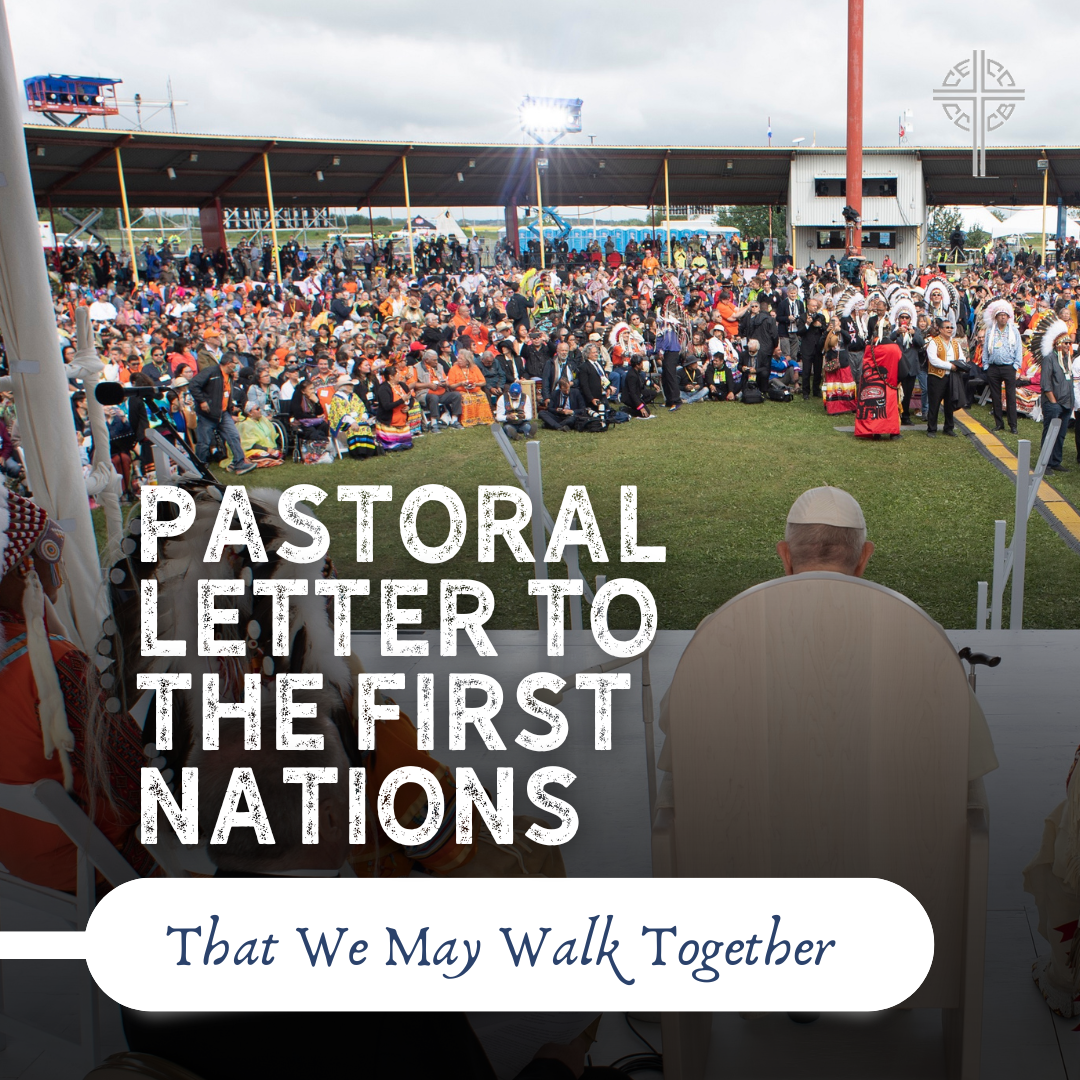
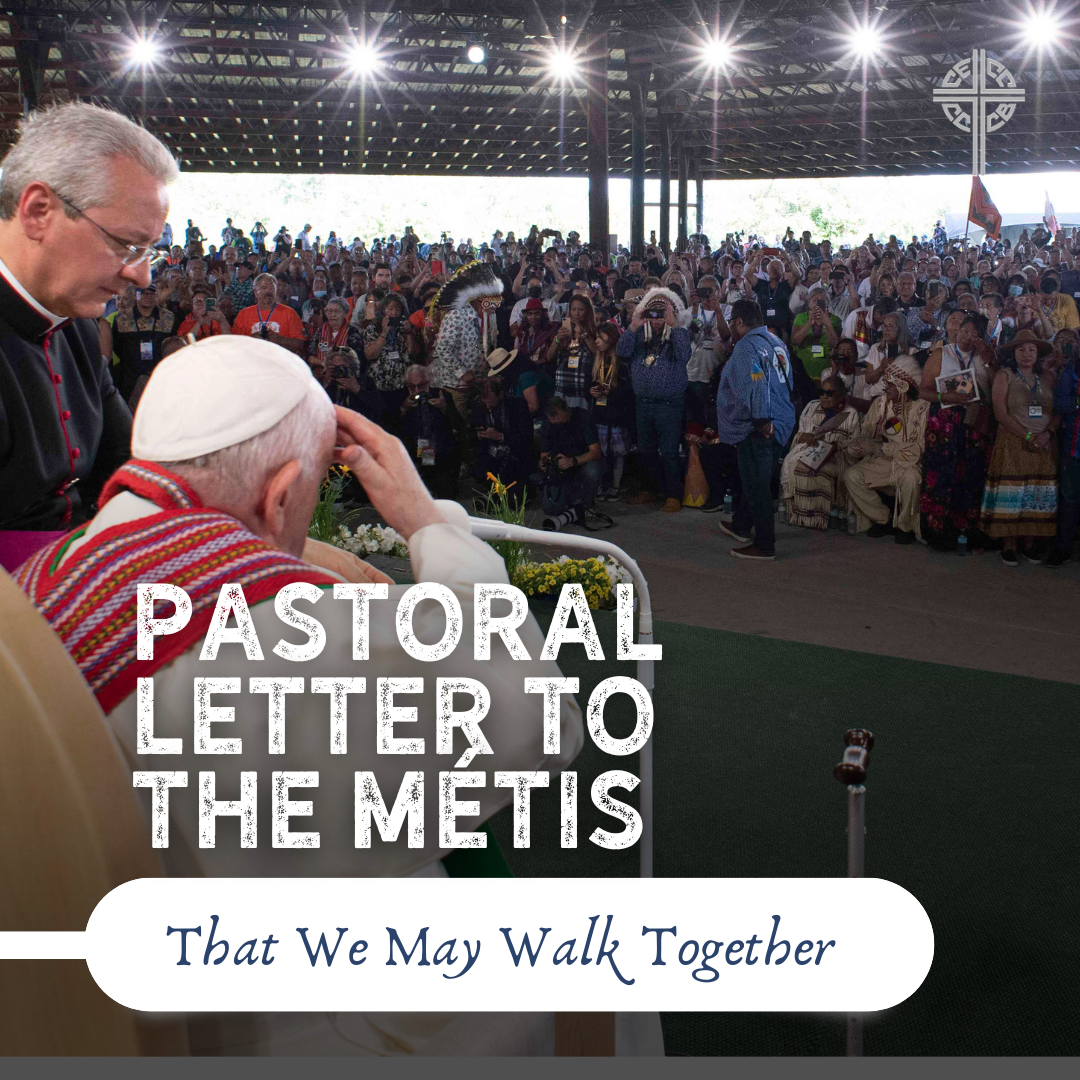
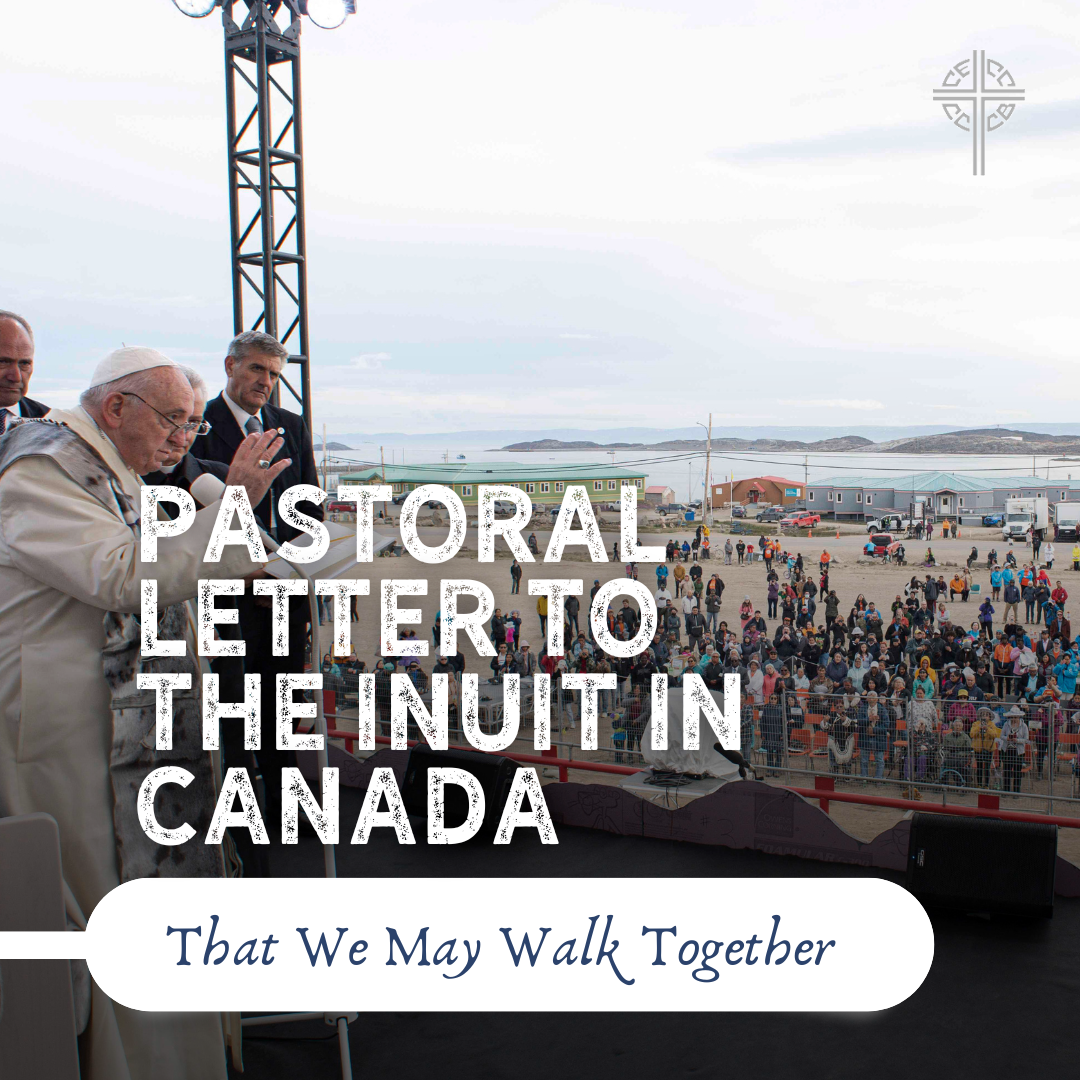
On 8 February 2023, the Canadian Conference of Catholic Bishops issued the following four pastoral letters on reconciliation with Indigenous Peoples. Intended as a framework for local engagement with Indigenous Peoples, the letters are the fruit of many months of listening, encounter, and dialogue with them, including through Listening Circles, the Indigenous Delegation to the Vatican in April 2022, and Pope Francis’ Apostolic Voyage to Canada in July of the same year. 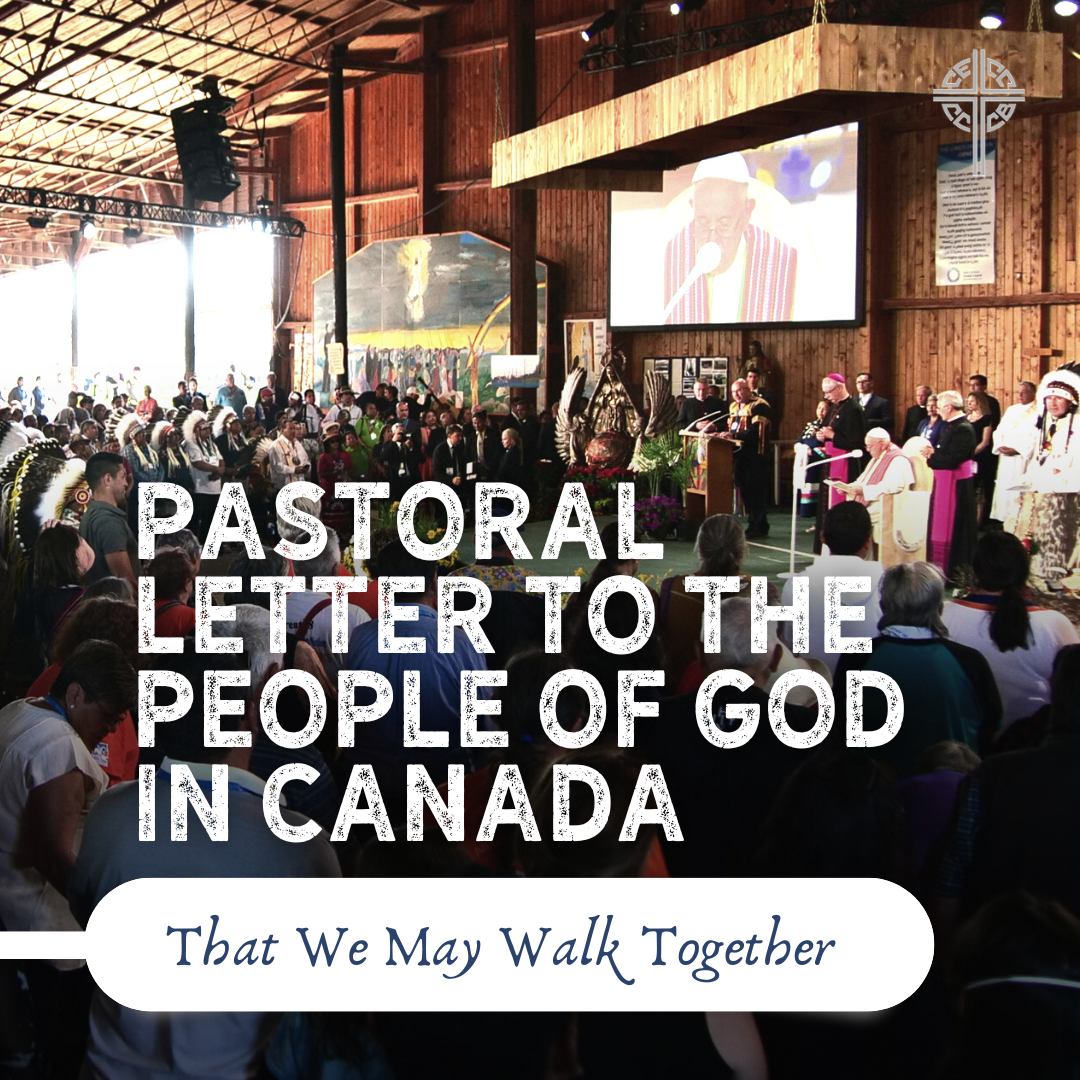
 Dr. Peggy Thomson-Gibson Dr. Peggy Thomson-Gibson
Canadian Catholics who want a more fulsome public discussion of the law regarding medically-assisted death are being called to use their faith to move a legislative mountain. But take heart. The first item on the change agenda involves something as simple–and important–as writing letters to your Member of Parliament and key government ministers, says Dr. Peggy Thomson-Gibson.
The catch? With people’s lives at stake, there’s no time to lose. A Catholic and Calgary physician, Dr. Thomson-Gibson recently addressed MAiD (Medical Assistance in Dying) at a special meeting held at St. Peter’s parish. There, the medical doctor encouraged Catholics to learn how “we can defend our faith without raising our voices.” To do that, Catholics need solid information about their faith–and about what’s at stake, especially with proposed changes to MAiD law, says Thomson-Gibson. The problem with MAID Approved in 2016, existing MAiD law allows Canadians to choose a medically-assisted death when their death is “reasonably foreseeable.” Health Canada recorded 7,595 MAiD deaths in 2020, up from 1,108 in 2016. For information about why the Church rejects euthanasia or assisted suicide, visit this page. Looking ahead, the number of MAiD deaths to date are a fraction of what was expected had proposed amendments come into effect this March. The now-delayed changes expanded MAiD’s accessibility while simultaneously decreasing oversight, says Dr. Thomson-Gibson. Of primary concern was a change that allowed people with mental illness as their sole criterion to choose a medically-assisted death. People with a severe long-term condition or disability could also access MAiD, opening the door for medically-assisted death to be offered instead of treatment. Opponents say this confuses the notion of a “right” to die with a “duty” to choose death over treatment. This is especially troublesome in a public health system where disabled or mentally-unwell individuals could be made to think they are a financial burden on their families or society. Information released in 2022 shows the proposed changes also cut a mandated reflection period for those whose death is “reasonably foreseeable” under current law. Instead of a 10-day period, the changes required a single day. Another change drops the legal requirement for two witnesses to one and the sole witness could be a paid health professional. These amendments were scheduled to come into effect in March 2023. They were delayed in late 2022, and again last week. This provides more time for study and input. That timeline underscores the opportunity for faith-based outreach, like letters to the Prime Minister and individual Members of Parliament, says Thomson-Gibson. She suggests letter writers model respect in their letters and conversations about MAiD. Catholics looking for more guidance about how “to shed light, not heat” on hot-button topics should check out information from Catholic Voices Canada (https://catholicvoices.ca), adds the doctor.
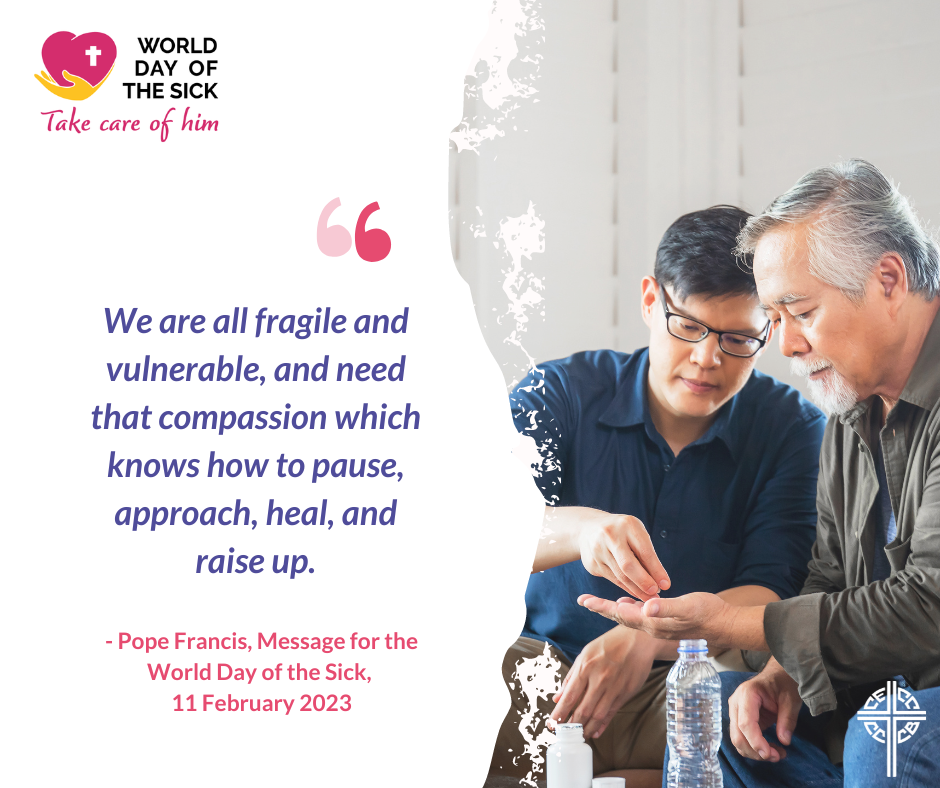 The World Day of the Sick is celebrated each year on February 11, the liturgical memorial of Our Lady of Lourdes. It is an occasion to pray for individuals who are suffering, and to find concrete ways to draw nearer to them. The Holy Father's 2023 message is entitled: "Take care of him - Compassion as a synodal exercise of healing". In light of the Church's synodal journey, Pope Francis invites us "to reflect on the fact that it is precisely through the experience of fragility and illness that we can learn to walk together according to God's style of closeness, compassion and tenderness."
Pastoral suggestions for the World Day for the Sick (Feb. 11, 2023) for parishes and all the faithful:
Resources for World Day for the Sick:
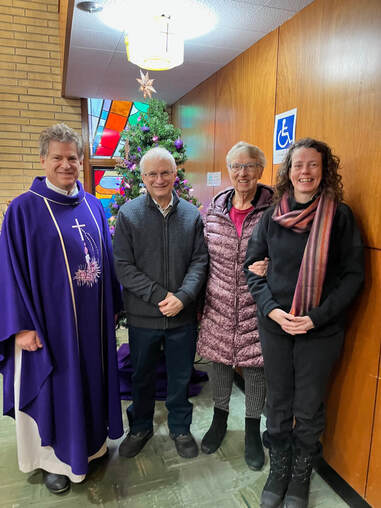 L to R: Fr. Kevin Tumback (Pastor, All Saints Parish in Lethbridge), Jim Manzara, Esther Lambert, and Helen Manzara L to R: Fr. Kevin Tumback (Pastor, All Saints Parish in Lethbridge), Jim Manzara, Esther Lambert, and Helen Manzara This is supposed to be a Christmas party, but among the seated rows of female inmates women are sobbing quietly. As they cry, a sympathetic arm might be briefly placed around someone’s shoulder or a toilet roll passed from hand to hand to wipe up tears. On a bitterly cold night in December, I was privileged to attend the 2022 Christmas service at the Lethbridge Correctional Centre. Here I am witnessing the dichotomy of life in prison – isolation within community, loneliness with companionship, abandonment but also accompaniment. This is the essence of prison ministry. The Lethbridge Correctional Centre houses inmates serving sentences of less than two years. According to the Alberta Government website, it has a capacity of just under 400 persons. For the past six years the Centre’s coordinating chaplain has been Rev. Anna Braun, a Baptist Minister. During the Covid lockdown, Braun and a co-chaplain ministered to the prison population on their own, (a time Braun discovered to be surprisingly meaningful). However, now that restrictions are lifted, ministry volunteers from several area churches are once again active within the prison community. Among them is a Catholic group, Friends of the Lethbridge Correctional Centre, presently led by Jim and Helen Manzara from All Saints Parish. They are supported by other volunteers from both Lethbridge parishes. These stalwarts lead worship services once a month and rosary prayer twice a week. In addition, Father Derek Remus hears confessions and participates in a program called Exploring Your Faith which is part teaching and Q&A. Once a year all the Christian denominations gather to present a Christmas Service which includes carol singing, an inspirational message, and treat bags for the inmates and staff alike. This service is unusual in that it includes the entire prison population unlike the weekly services at which attendance is voluntary. Visiting a jail can be daunting initially. I was asked to leave all personal possessions in a locker. After signing in and passing through a metal detector, I was escorted by a guard along wide hallways to a brightly-lit gymnasium. The gym had been gaily decorated earlier by some of the female inmates. There was even a Navajo themed crèche. For the first while volunteers formed an assembly line to fill paper bags with donated treats like foodstuff, stationery and (separately) coveted bars of Irish Spring soap! Each brown sack had been painstakingly decorated by an elementary school student. They displayed messages of hope, Scripture verses, and even corny jokes. Braun explained that the students knew who they were creating the bags for and put their hearts into the task. Once the bags were filled a small group of volunteers departed to bring music and treats to the segregated units. As the gym door closed behind them, a ripple of anticipation ran through the remaining volunteers. Musicians took their places and singers gathered around. Suddenly the gym door was unlocked and the first unit entered. Men dressed in blue jumpsuits or dark sweats, with ubiquitous orange plastic clogs clustered onto a section of bleachers. As carol singing commenced, I saw toes tapping, swaying to the beat and the occasional person singing along. One unit had a ‘choir’ who sang Silent Night beautifully. Appreciative applause followed every song. Then Braun rose to offer a few words, her familiarity with the prisoners immediately apparent. She spoke about Jesus being poor, homeless, misunderstood and rejected by his community. She reminded everyone that Jesus came to bring light for our world and that each of us can be a bearer of light too. She said, “If you think you can’t be a light in this place just stand in a dark cell and look at that thin strip of light under the door. See what an impact a little light can have.” To another group Braun quoted John 3:17, telling them that though the judicial system might have condemned them, Jesus did not. One of the most affecting moments came when Braun told a women’s unit, “When you think about the birth of Jesus, one little baby doesn’t seem significant. Until you have one, then you realize it’s everything.” It was immediately clear from the tearful reactions how many people were struck by the comparison. After her message, Braun led each group in a cheerful rendition of This Little Light of Mine and the inmates left smiling, expressing thanks for their gift bags and offering good wishes to all. 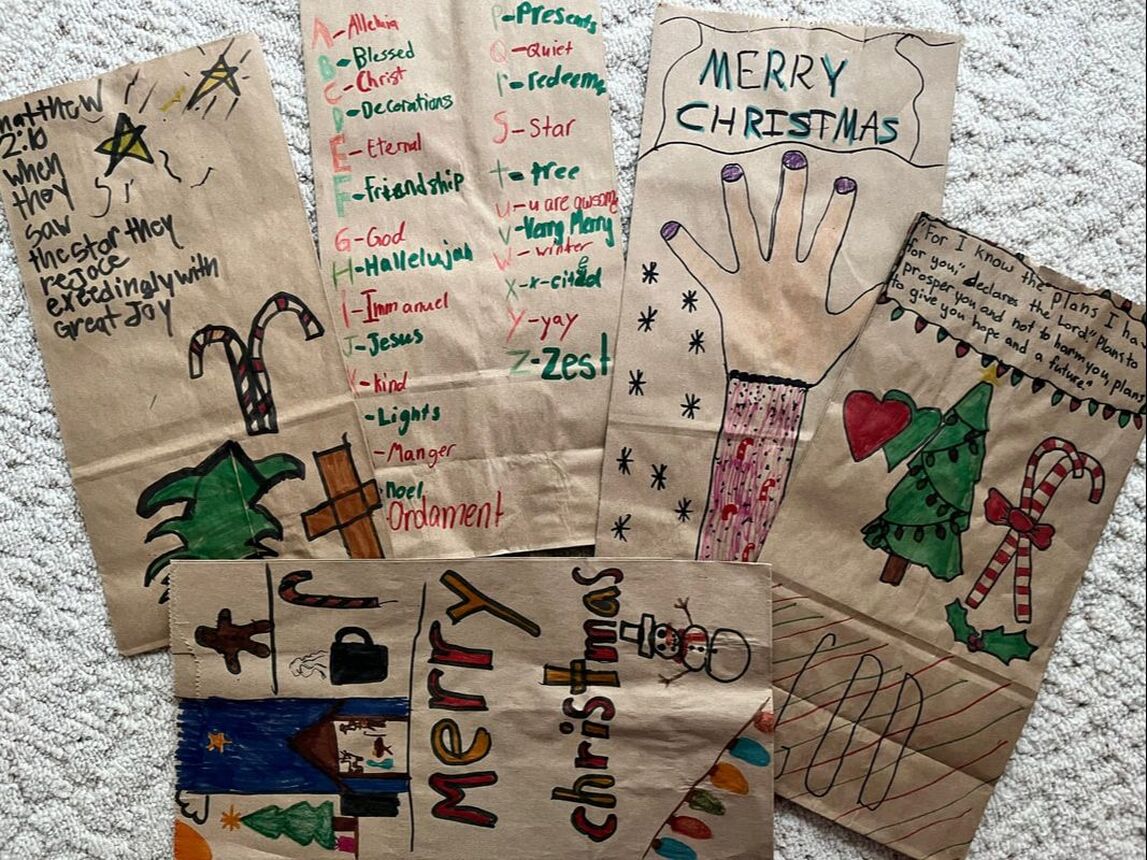 Treat bags decorated for prisoners by elementary school students. The powerful message of Christmas seems to fade in the cold months which follow; perhaps more quickly in jail than elsewhere because residents are so isolated. All the more reason for Christians to heed Jesus’ words, “I was in prison and you came to visit me” (Matthew 25:36). Post-Covid there is a pressing need for more volunteers in prison ministry. I asked a couple of the current volunteers what they enjoy most about the work. Repeatedly I heard how thankful the prisoners were. “The happy faces”, Helen Manzara said. “They are not a captive audience but they are captivating in so many ways”, Esther Lambert said. Lambert went on to elaborate, “There are often of a mindset that they are not lovable, not worthy. When I explain that I come to see them because in them I see the face of God, their expressions turn me to tears. I know of no other group where I would experience that love and appreciation.” So as you make your 2023 resolutions, please consider becoming a “light in the darkness” and thereby finding Jesus among those who are imprisoned.
The Paradoxical Commandments
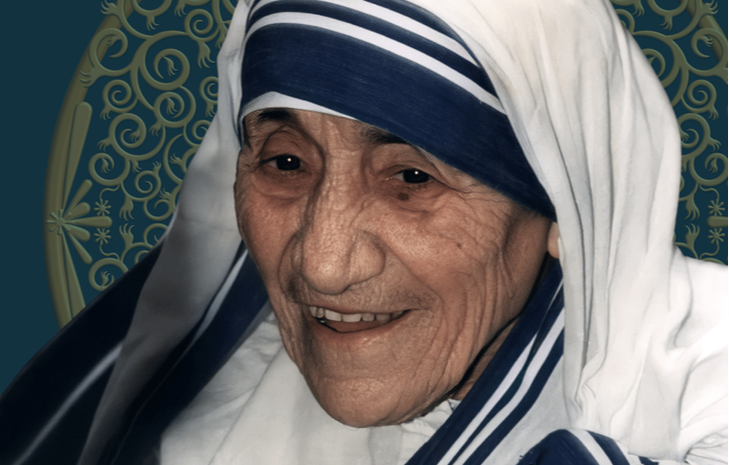
On this 25th anniversary of Mother Teresa’s death, Bishop McGrattan highlights the words of “The Paradoxical Commandments,” embraced by this saint of the poor. When Mother Teresa first heard these words, written by Dr. Kent M. Keith, an American lawyer, writer and leader in higher education, she was moved to put them on the wall of one of her homes for children in Kolkata. They are a sure guideline for finding personal meaning in the face of adversity and transcend all creeds and cultures. They very aptly describe Mother Teresa’s way of dealing with such a huge number of people throughout her lifetime.
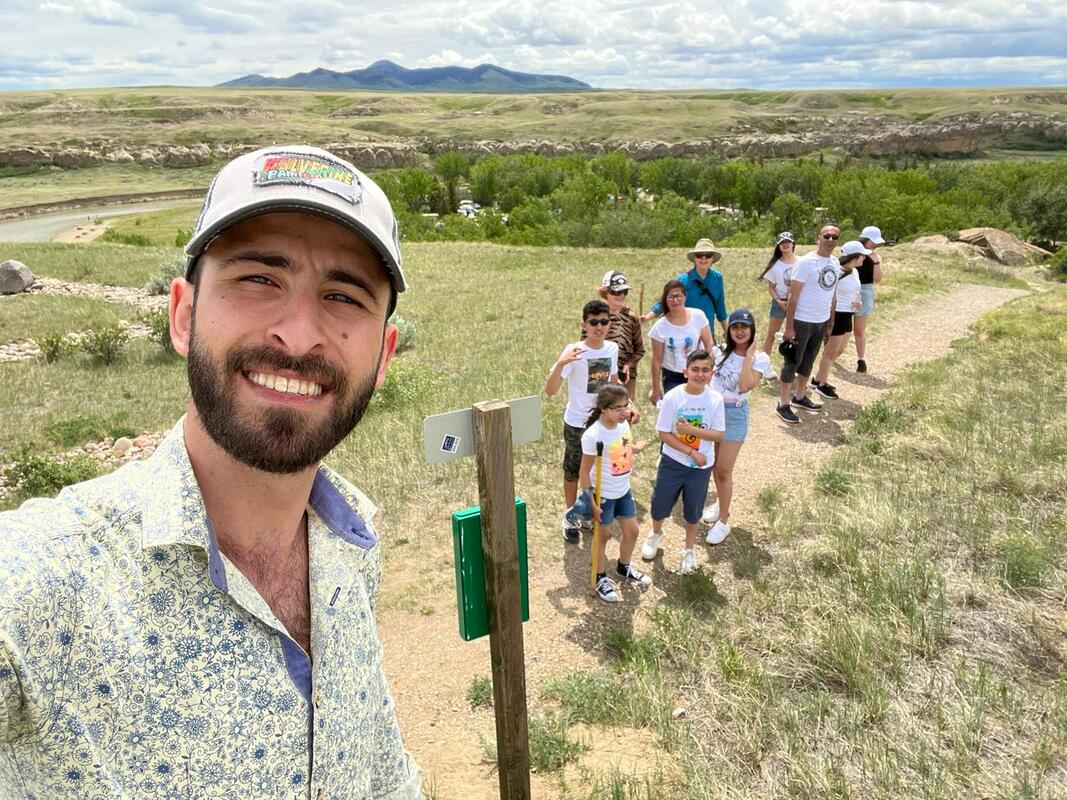 Why would 10 Syrian refugees want to visit Writing-on-Stone of all places? Well, if they are accompanied by dedicated volunteers who want to spend a day making new friends and meeting snakes head-on, then wishes fulfilled! On June 11, 2022, several Syrian refugees, part of three families who have been settling into life in Lethbridge, Alberta, went on an outing to Writing-on-Stone Provincial Park. These families had not been outside of Lethbridge since their arrival to Canada. Some have been here a few years, and the latest just arrived on April 14 of this year. They relished the chance to see this Unesco World Heritage Site. The entire day was very capably organized by Trudy Niggli and the CWL of Allerston Parish, a mission church of St. Peter’s Parish in Milk River. The day started with a Mass at St. Isidore Catholic Church in Allerston. It was a poignant start to a day that was heaped to the top with blessings and graces. The Mass was arranged specifically for the visiting Syrian families, so Fr. Salvador Ahumada’s sermon reflected on the experiences these families have gone through. He spoke of their forced relocation; seeing the weakness of man; leaving behind loved ones and belongings; grappling with learning a new language and culture. He exhorted them to hear the Lord calling them, to keep praying and to hope in Him. “You needed to be strong, and came here out of need, not want.” He challenged them to be the ones who can make the change, to see God’s hand at work, and to lean on Him for strength. He also prayed that our society may once again be Christian, and to pray for the ones left behind. Fr. Sal reminded them that they had a responsibility to encourage others in the faith. We left the church feeling blessed and inspired. 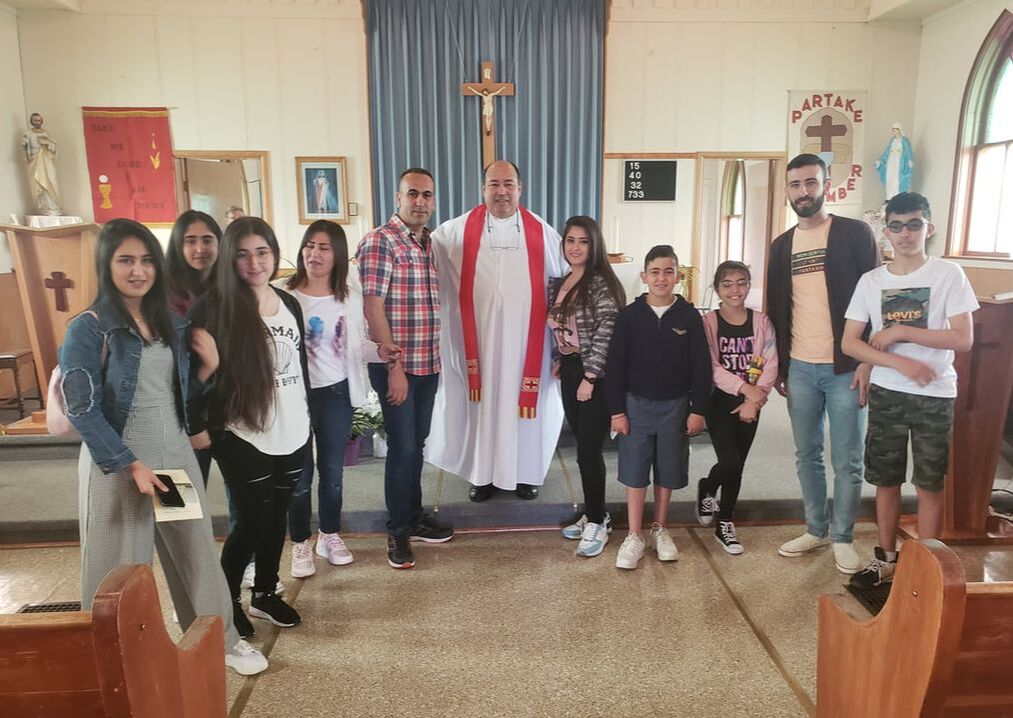 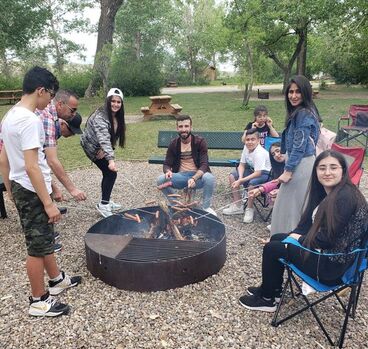 After the Mass, we continued into the Writing-on-Stone Park, where George Kardoh played on his Karbouka (Egyptian hand drum) , accompanying the singing of Syrian folk songs. Everyone enjoyed the true Canadian experience of roasting hot dogs and marshmallows over the campfire, and dodging the smoke. The park guide, after a Blackfoot introduction, gave us a free tour of the petroglyphs, and a snake even said hi on our path! A perfectly timed thunder burst after the campfire led into an impromptu and hilarious polka dance as we waited out the storm in the picnic shelter. It was truly a memorable day with new friends, and thought-filled conversations about the refugee situation. This day came from an initiative of Fr. Kevin Tumback, pastor of All Saints Parish. He suggested pooling three parishes together to support the refugees. So St. Martha’s Parish, All Saints in Lethbridge, and Allerston Mission Parish near Milk River joined forces and the results have been heartwarming. All Saints Parish had already hosted two Syrian families, so their expertise was very helpful with settling the following two families. Brian Wright, a long-time member of All Saints Refugee Committee says, "Our Syrian families do cause us to pause and reflect on how fortunate we are to be living in Canada. It is also wonderful to be welcomed to their family just as we have welcomed them. We are the surrogate family for them in Canada, and it is a lifetime journey of sharing, learning from each other, and supporting them in their everyday life in Canada. For us, it has been an expansion of our family." Another long-time member, Maureen Barnard, reflected that we are the family for these refugees. "We are their security as we help them navigate a new culture, a new language and a new life. We are their friends when they feel alone. We are their advocate when they need help to find a job , or get to school or go to a doctor. We are their voice when they do not yet have a voice here in Canada. It is a journey worth walking with our refugees. We feel the presence of our Lord Jesus Christ walking right beside us, every step of the way. We have witnessed so many miracles as people come forward and give from their hearts, often providing just what was needed at the time." Lana Takla, who arrived in Canada 6 years ago, talks about coming from a village where their whole life revolves around the two hundred and fifty or so residents plus the priest and their church. They are deeply dependent on our Lord for their daily lives and they miss that community when they come to Canada. They are in constant fellowship in Syria so they miss the other family members they have left behind. Mazyed Takla, who came to Canada with his family in October, 2021, felt that he misses the food, the weather, their music, their friends and their homes. George Kardoh, the most recent arrival (April of 2022), expresses that he feels welcomed and loved here in Canada but awaits anxiously the rest of his family. He feels very alone at times. They all love the fact that they can trust a bank, the government, and they know that no one here will try to do them harm. They trust us but there are still many challenges - learning a new language, cultural and food differences, financial burdens, and the longing to be reunited with family left behind. The Refugee Committee embraces the work we do as servants of the Lord. We are His body on earth, and we are richly rewarded in this work. “So then you are no longer strangers and aliens, but you are citizens with the saints and also members of the household of God.” (Ephesians 2:19)
 How do we help our Ukrainian brothers and sisters beyond prayers?
The tragic consequences of this war have created grave needs for our brothers and sisters in Ukraine. Now more than ever we are called to recognize the responsibilities we have for each other as St. Paul’s letter to the Ephesians reminds us, “So then you are no longer strangers and aliens, but you are citizens with the saints and also members of the household of God.” (Ephesians 2:19).
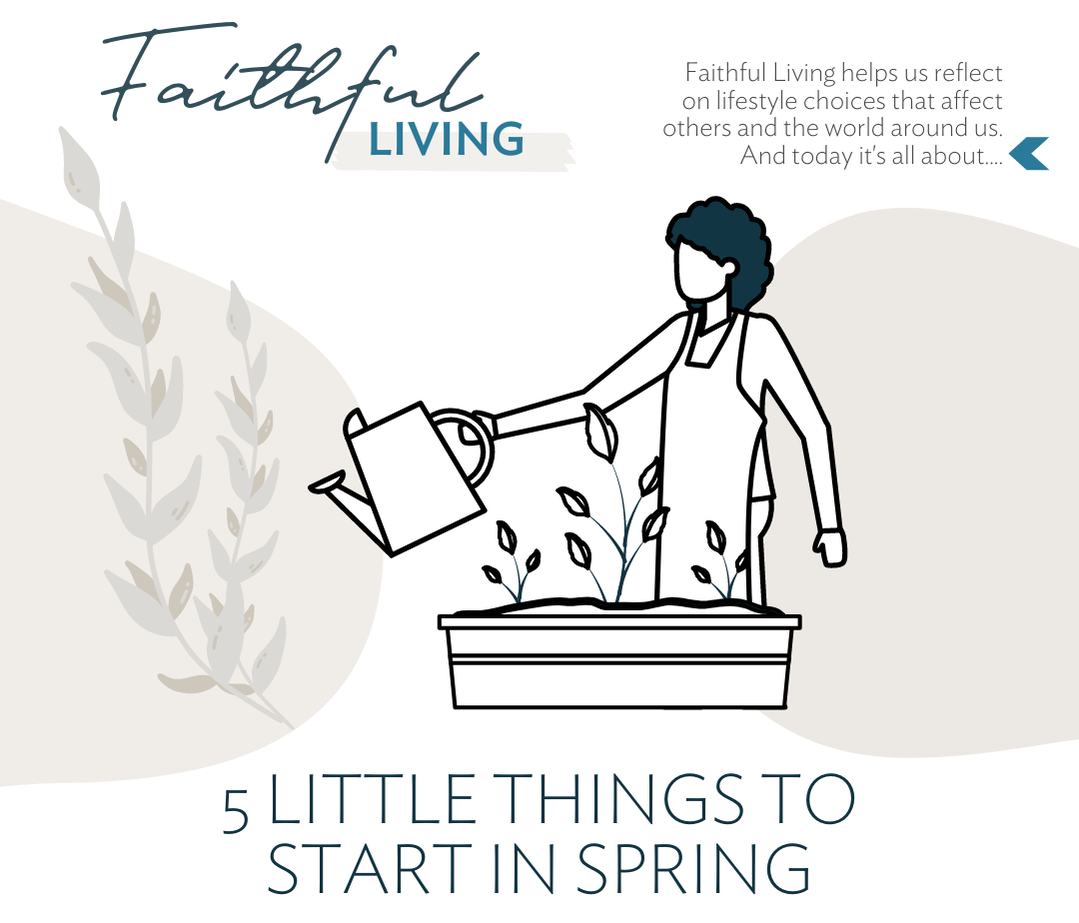 "The Lord God took the man and put him in the garden of Eden to till it and keep it." Genesis 2:1-14.
We are called to take meaningful actions to care for God's creation. If you are unsure of where to start, here are 5 ideas to consider this spring:
There are many simple and creative ways “to protect the earth and to ensure its fruitfulness for coming generations” (Laudato Si’ 67). Find more action items in Laudato Si' Week 2022 Celebration Guide (May 22-29, 2022).  Here are 5 small individual actions that help save you gas, build community, and can have a huge impact for our earth:
Pope Benedict XVI reminded us that our environment is God's gift to all people, and the use we make of it entail a shared responsibility for all humanity, especially the poor and future generations. "We are all responsible for the protection and care of the environment. This responsibility knows no boundaries. In accordance with the principle of subsidiarity it is important for everyone to be committed at his or her proper level, working to overcome the prevalence of particular interests." (2010) Consider this... Everything starts with a small step. "A little leaven leaveneth the whole lump.” Galatians 5:9 |
Author
Catholic Pastoral Centre Staff and Guest Writers Archives
July 2024
Categories
All
|









 RSS Feed