|
On September 15, the Church reflects on Mary’s faith and perseverance as she shared in her Son's suffering at the Cross. Devotion to Our Lady of Sorrows began in the Middle Ages, centred on her Seven Sorrows. The feast was extended to the whole Church and fixed on Sep 15 by Pope Pius X. The Memorial of Our Lady of Sorrow invites us to draw strength from her example and to trust in God even in times of sorrow. Prayer to Our Lady of SorrowsO most holy Virgin, Mother of our Lord Jesus Christ, by the overwhelming grief you experienced when you witnessed the martyrdom, the crucifixion, and death of your divine Son, look upon me with eyes of compassion, and awaken in my heart a tender commiseration for those sufferings, as well as a sincere detestation of my sins, in order that being disengaged from all undue affection for the passing joys of this earth, I may sigh after the eternal Jerusalem, and that henceforward all my thoughts and all my actions may be directed towards this one most desirable object. Honour, glory, and love to our divine Lord Jesus, and to the holy and immaculate Mother of God. Amen. (Prayer commonly attributed to St. Bonaventure). Meditations on the Seven Sorrows of MaryOpening: O God, come to my assistance. O Lord, make haste to help me. Glory be to the Father, the Son, and the Holy Spirit, as it was in the beginning, is now, and ever shall be, world without end. Amen. Pray one Hail Mary while reflecting on each of the seven sorrows of Mary.
Pray more
0 Comments
The dedication of any outdoor Stations of the Cross is a profoundly moving and spiritual occasion, marked by reverence, reflection, and communal unity. It is more than a ceremonial event; it is the culmination of faith, planning, and devotion, manifesting in a sacred space that invites all who pass through to journey alongside Christ in His Passion. Such an occasion serves not only to honour the memory of Jesus' suffering and sacrifice but also to offer a physical and spiritual path for the faithful to engage deeply with their beliefs. St. Paul’s Parish recent dedication day began with an outdoor Mass, gathering parishioners and the local community. The gathering drew together people of all ages and walks of life. As people arrived, there was a palpable sense of anticipation and reverence in the air. Clergy, lay leaders, benefactors, and parishioners joined in unity, recognizing the significance of what was being dedicated: a permanent, prayerful, outdoor space for meditation and encounter with Christ. Coinciding the dedication with Father’s Day on June 15, 2025 was an opportunity to welcome back a great friend of the Nation, Father Tim Boyle, to preside over the celebration. Fr. Tim and Fr. Roy Jayamaha set the tone for the day, highlighting the inspiration behind the project, the generosity of donors, and the spiritual hope that the Stations will offer pilgrims for years to come. The clergy, followed by the community, then blessed the entire path with holy water, invoking God's presence and protection over all who walk its length. Each station was crafted with care and attention to sacred artistry, representing a step in Jesus' journey to Calvary. As a parish we processed from one station to the next, where prayers and reflections were offered. Each station represents a pause to reflect upon Scripture, and meditate, drawing participants into the emotional and spiritual weight of each moment, from Christ’s condemnation to His burial and resurrection. The outdoor setting added a unique layer of connection to nature, enhancing the sensory experience and making the walk more tangible and immersive. What makes an outdoor Stations of the Cross particularly meaningful is its accessibility. Unlike indoor sanctuaries that may only be open at certain times, an outdoor path invites prayer at any hour. The presence of these stations in a natural setting, nestled alongside the property perimeter, reminds visitors and pilgrims that the sacred is not confined to buildings but permeates all of God’s creation. As the dedication concluded, and the final blessing was offered, the faithful were encouraged to return to the site often, especially during Lent and in times of personal need. Hymns were sung, and a community feast followed, offering a time for fellowship and quiet conversation. The dedication of St Paul’s outdoor Stations of the Cross will leave a lasting impression. It remains a gift to the entire community, a visible sign of faith, and a legacy for future generations. In a world so often marked by noise and distraction, this sacred location provides a place of peace, reflection, and our deeper journey with Christ. Written by Deacon Thomas O'Toole, St. Paul's Parish, Brocket, AB. Photos courtesy of Nancy, Knothole Photography.
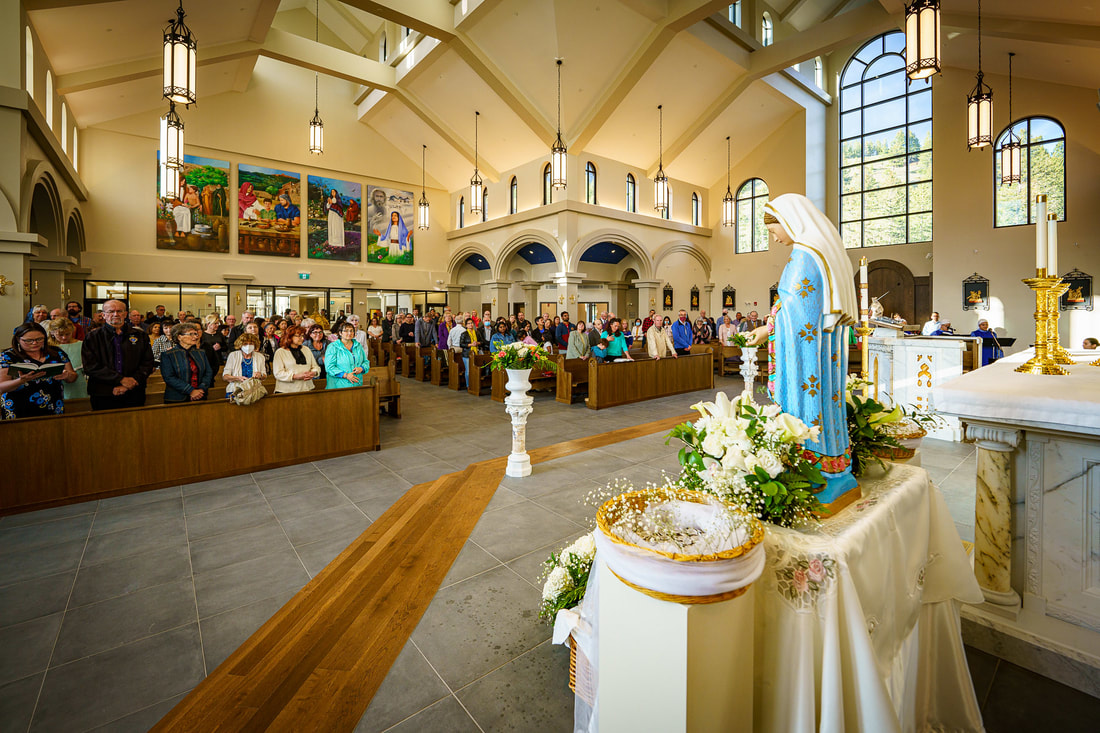
Something special has returned to St. John the Evangelist parish in Calgary: a newly painted statue of Our Lady of Walsingham graces our parish, bringing beauty, history, and a deep spiritual connection to one of the most beloved Marian devotions of the English-speaking world. But this statue’s journey to us has its own story—one that speaks of patience, providence, and the rich heritage of our Catholic faith. The statue, hand-carved in Oberammergau in Germany, was purchased during the COVID-19 pandemic. To save money, Fr. Robert-Charles Bengry, our parish priest and Dean of the Ordinariate of the Chair of St. Peter in Canada, chose to buy it unpainted, thinking he’d get to it soon enough. “We’re a small and poor parish,” he explains. A few years passed, and with parish life always demanding his attention, the task unfortunately remained unfinished. But as the Jubilee Year arrived, Father knew it was time to finally bring it to life. “Truth, goodness, and beauty are so very important to us as Ordinariate Catholics of the Anglican tradition,” Fr. Bengry says, “and so I’m happy to have been able to beautify the parish in this way.” For many Catholics, Our Lady of Walsingham may not be a familiar title, but her story is deeply rooted in our shared Christian history. In 1061, the Virgin Mary appeared to a noblewoman in England, requesting that a replica of the Holy House of Nazareth be built. That simple home became one of the greatest pilgrimage sites in medieval Christendom. Sadly, during the English Reformation under King Henry VIII, the shrine was destroyed, and devotion to Our Lady of Walsingham was nearly lost. But love for Our Lady can never truly be extinguished. Over time, her shrine was restored near to the ruins, and today, it remains a place of deep prayer and encounter with Christ. “Our Lady wanted us to know Christ through the Holy House, ultimately through the family home, the domestic Church,” Fr. Bengry reflects, adding, “and isn’t that something we need today, in this time, in this culture?” For Catholics of the Ordinariate of the Chair of St. Peter—originally for those who come from an Anglican heritage but now with a greatly broadened mission—Our Lady of Walsingham is especially dear. She is our patroness, a mother who has walked with us on our journey home to full communion. “God has been so very good in bringing us home to the Catholic Church,” Fr. Bengry says. “As a thank-you of sorts, we’d love to welcome diocesan Catholics this Jubilee Year and introduce them to Our Lady of Walsingham.” This Jubilee Year brings a special invitation. St. John the Evangelist has been designated by Bishop Steven Lopes (our Ordinariate Bishop) as a pilgrimage site, meaning the faithful can receive a Jubilee Indulgence by making a pilgrimage here, praying before the Blessed Sacrament, and fulfilling the usual conditions of sacramental confession, Holy Communion, and prayers for the Holy Father’s intentions. The newly installed statue is more than a beautiful image—it holds a relic, a fragment of the ruins from the original Walsingham shrine site. To stand before Our Lady here is to stand in spiritual and physical connexion with centuries of faith and devotion. And there’s another unique touch: the holy water at St. John’s always contains water from the sacred well at Walsingham. “It’s very special,” Fr. Bengry notes, a tangible link to the graces of that ancient place of pilgrimage.
Submitted by St. John the Evangelist Parish Office
A Moment of Grace in Calgary The relics visited Calgary as part of the National Visitation. On Saturday, Jan 4, the relics were hosted at St. Albert the Great Parish for veneration, reconciliation, and prayer ministry throughout the day. Bishop McGrattan celebrated Mass at 5:00 pm, followed by a short talk by Fr. John O'Brien, Director and Jesuit Superior of the Martyrs' Shrine in Midland, Ontario. Mathieu Couture, a parishioner of St. Joseph in Calgary who visited the relics at St. Albert the Great, reflected on the experience: “What stood out to me was that St. Jean de Brébeuf and St. Kateri Tekakwitha came from two very different worlds. Despite their differences, they were united in their love for Christ. Both endured great suffering for their faith, and through this shared suffering, they found unity.” He added, “I believe this is a message our world needs to hear again. In a time when society faces increasing division, we should remember Christ’s vision of unity: that we are one people in Him.” The relics tour offers opportunities for personal prayer and reflection. Attendees are encouraged to bring written prayer intentions, which will be taken back to the Martyrs' Shrine. Holy cards, rosaries, and medals can also be pressed to the reliquaries to create spiritual keepsakes. A Moment of Grace in Tsuut’ina Nation A highlight of the tour was their stop at the Tsuut’ina Nation on Jan 5, where events unfolded at the Seven Chiefs Sportsplex & Jim Starlight Centre. The day opened with a Traditional Ceremonial Welcome of the relics, followed by Holy Mass celebrated by Bishop William T. McGrattan. Fr. Cristino Bouvette, who coordinated the visit, shared his reflections: “Hearing the sound of the drum and traditional singing accompanying the relics as they entered the auditorium on the traditional lands of the Tsuut’ina Nation deeply moved me. To imagine that nearly 400 years ago, similar sounds, smells, and sentiments would have accompanied those same people as they walked in their flesh was a profound experience.” The schedule included a Jesuit-led program highlighting the historical and spiritual significance of the relics. Educational exhibits explored early relationships between Indigenous peoples and Catholic missionaries, as well as stories of Indigenous Catholics with open Causes for Canonization. A special exhibit also featured memorabilia from the 2022 Papal Visit to Canada. The visit to Tsuut’ina Nation offered a tangible step toward Truth and Reconciliation. Fr. Cristino noted, “An important part of the work of Truth and Reconciliation is not to focus exclusively on the worst part of our shared history, as important as it is to confront, but to look far enough back to the countless instances of harmonious relationships shared between Indigenous Peoples and the Church in Canada.” The presence of the relics from both the Canadian Martyrs and St. Kateri Tekakwitha served as a reminder of this shared history, inspiring hope for ongoing reconciliation efforts. One particularly moving story shared by Fr. Cristino involved a local Indigenous elder who had missed the opportunity to greet Pope Francis during the Papal Mass in Edmonton due to illness. “To see her today leading the procession of the relics on to her traditional territories and helping to represent the Chief and Council on behalf of her whole Nation felt like she got to make up for that earlier disappointment,” he said. As the relics continue their journey across Canada, they invite all people—Catholic and non-Catholic alike—to experience moments of grace and reconciliation. Whether through prayer, reflection, or learning about the history of the saints, this tour offers a unique chance to connect with Canada’s spiritual heritage.
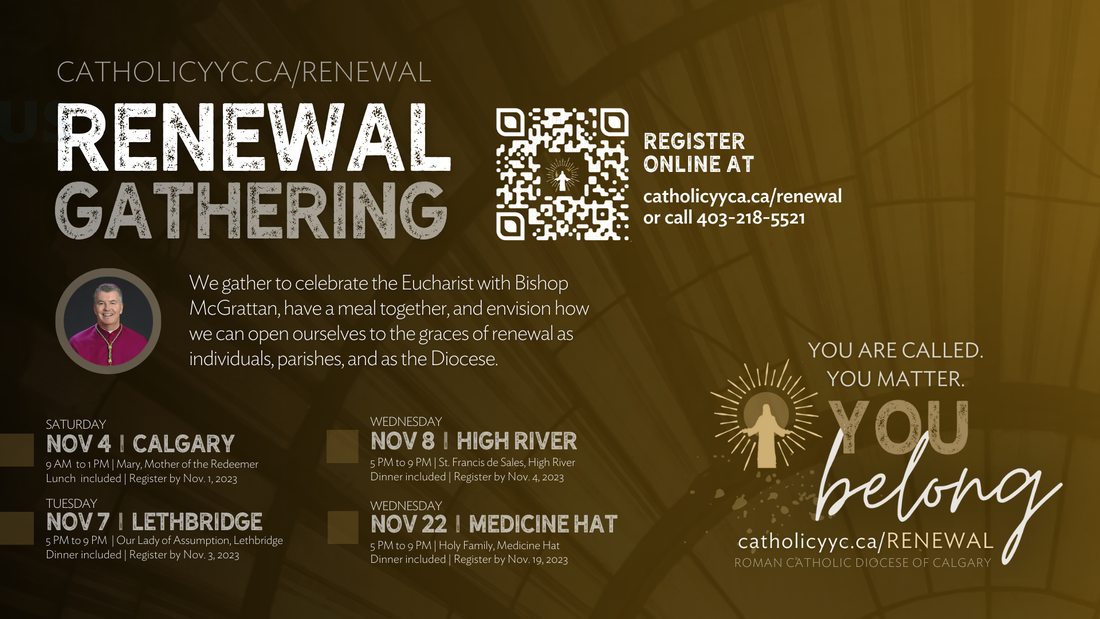
You could ask yourself: Why has Bishop McGrattan spearheaded this Diocesan Renewal? There are many reasons and causes, but as Catholics, we believe that, in the end, it is God who wants to renew the Diocese and to renew us: renewing us in our love for Him, our love for families, and our love for the faith. In this light, Ascension Catholic Parish went on a seven-week thematic journey each weekend during the Easter Season with a Series on the Eucharist. It was a chance to underline what we believe on Jesus’ own Word: that Jesus remains truly present among us, the Bread of Life. It aimed to deepen our understanding and increase our devotion, recognizing Jesus’ profound, constant love for his daughters and sons. The Series Fr. Daniel Wilson LC and I began the Series reminding us why Eucharistic devotion is so central to our faith, and in the subsequent weeks helped us to delve into its meaning and significance. To go through the topics that were discussed is, in itself, a mini-renewal of our understanding of this Sacrament: Each week, the Greeters and Ushers helped to give our small cards to every parishioner, as a reminder of the theme. It was a way of saying that you belong, you are called, you matter. On the back of the card, we had two points to chat about on the way home from Church: What did Jesus teach us? and What is Jesus saying to me today?
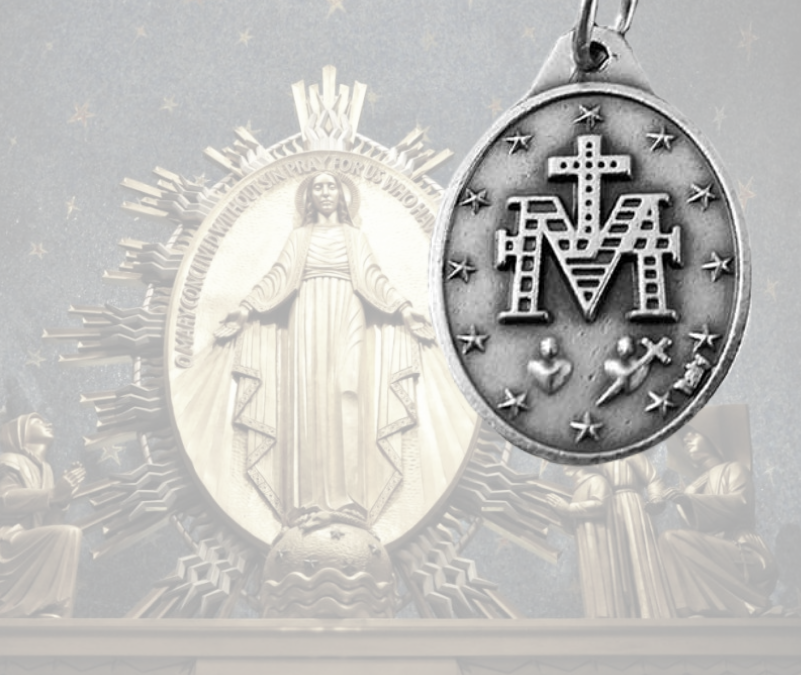
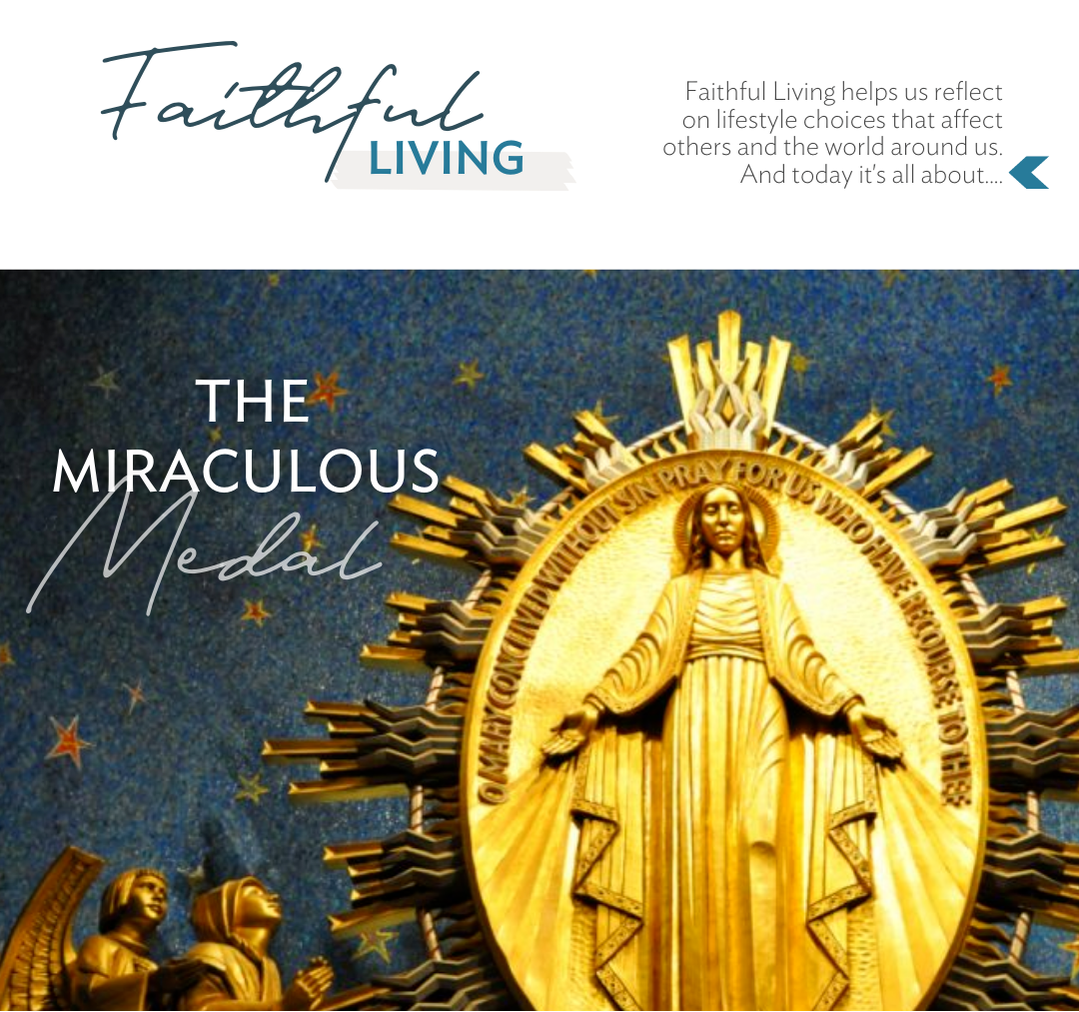
48,000 miraculous medals will be blessed by the Bishop on Monday, May 30, 2022 during the Mass at the Shrine Church of Our Lady of the Rockies. These medals have been donated by a very generous couple for distribution to the parishes of the Diocese. You may be curious about the meaning behind the miraculous medals and the practise of having such blessed objects of devotion. The miraculous medal belongs to a category of religious or devotional objects blessed and dedicated for the purpose of inciting faith and devotion. A blessed medal can make a person realize the closeness of God through His Saints especially our Blessed Mother. Our Lady appeared to St. Catherine Labouré in 1830 and showed her images with the instruction to “Have a medal struck upon this model. Those who wear it will receive great graces, especially if they wear it around the neck.” This medal was to express her closeness to her children especially those who call on her for help. The following explain the meaning and significance of the design of the medal:
The 48,000 blessed medals will be packaged and distributed to the parishes shortly after May 30, 2022. Please remember to look for these medals in your parish and take however many you would like to bring home and use. May the medal remind us that the mother of our Saviour is always concerned for our well-being. She wants us to be close to Christ and to pattern our lives after Him. May the medal make us experience her closeness… only a prayer away.
Source: AMM - Miraculous Medal Story
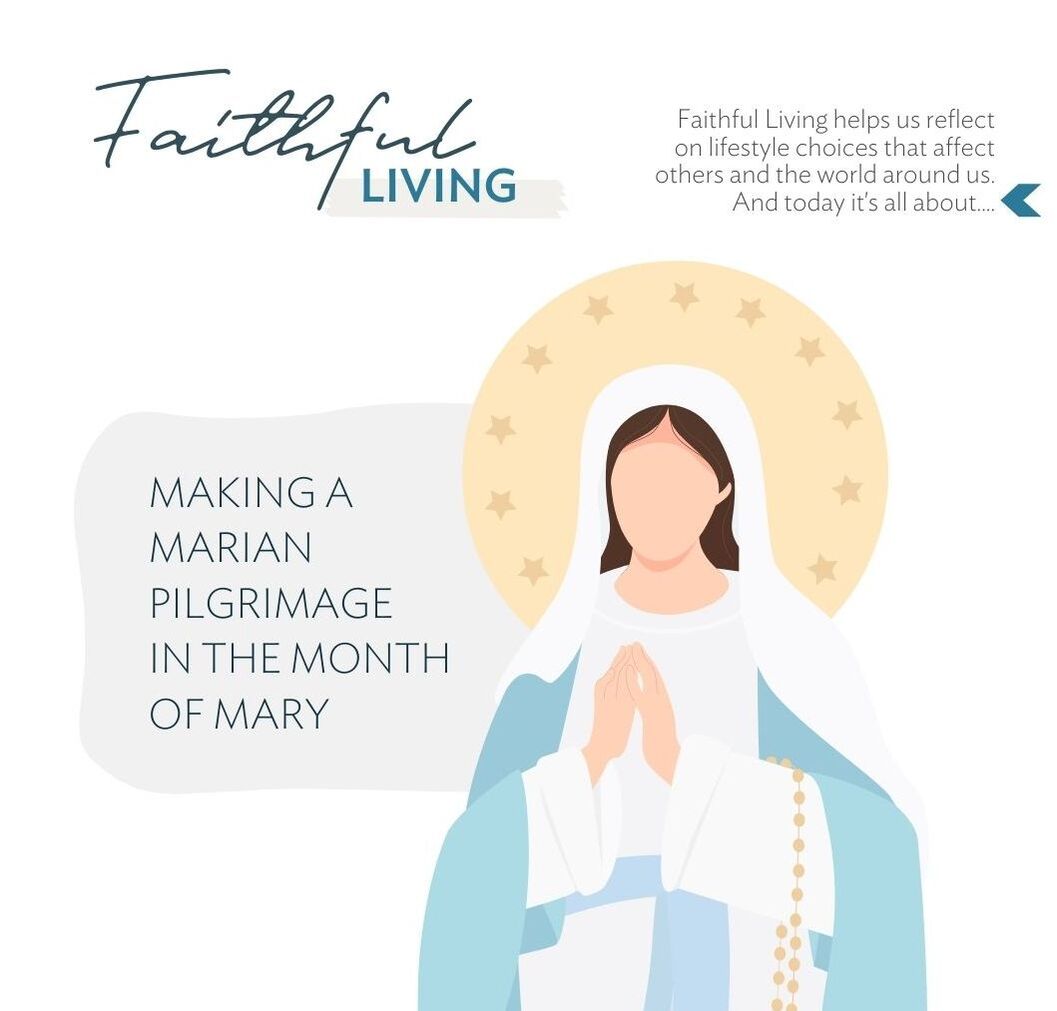
May is a month often associated with the veneration of Mary, the mother of our Lord Jesus Christ. One meaningful way to express our devotion to her is by undertaking a Marian pilgrimage. While it is common to think of organized Marian pilgrimages as the only way to embark on one, a meaningful Marian pilgrimage may be had by simply planning one that you journey alone, with another person, or with your family or a group of friends. A key part to making a Marian pilgrimage is to embark on a physical journey to a spiritual place. This can be far which will require a considerable trek or can be short as a few blocks' walk. What is essential is the desire to offer this special homage to our Lady and to pray and reflect while going towards the destination and back. This resource provides guidance on how to make a spiritual pilgrimage (printable, one page). Here are some suggestions of destinations for your Marian pilgrimage...
Don't miss the chance to make a pilgrimage during Our Lady of the Cape statue tour in Calgary and Canmore:
Consider this...
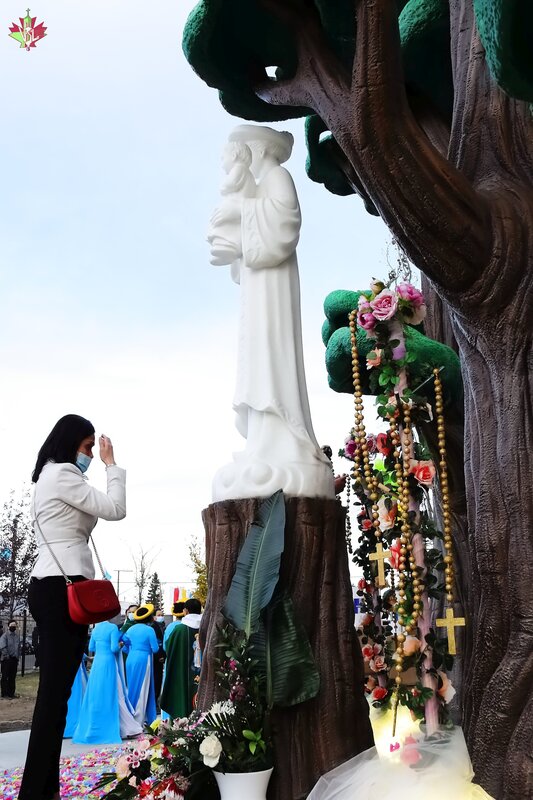
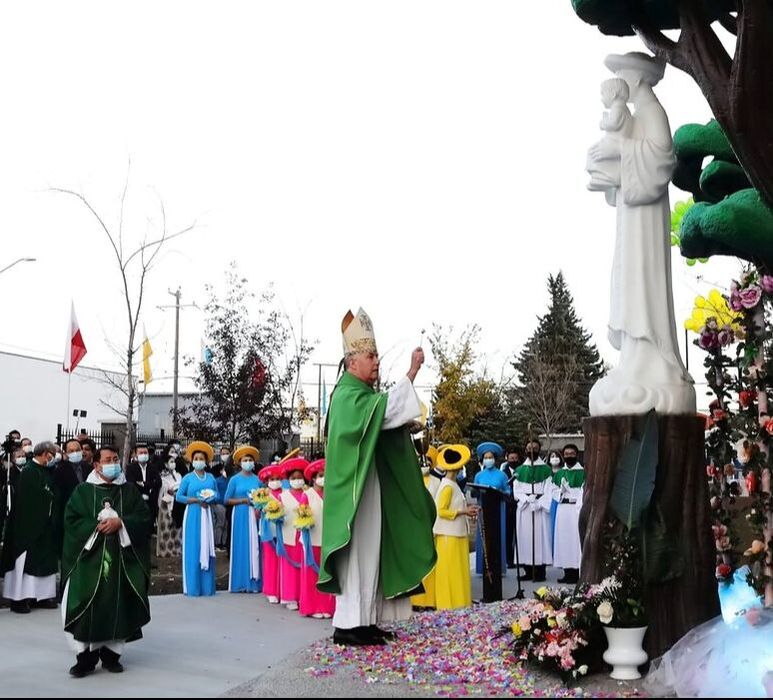
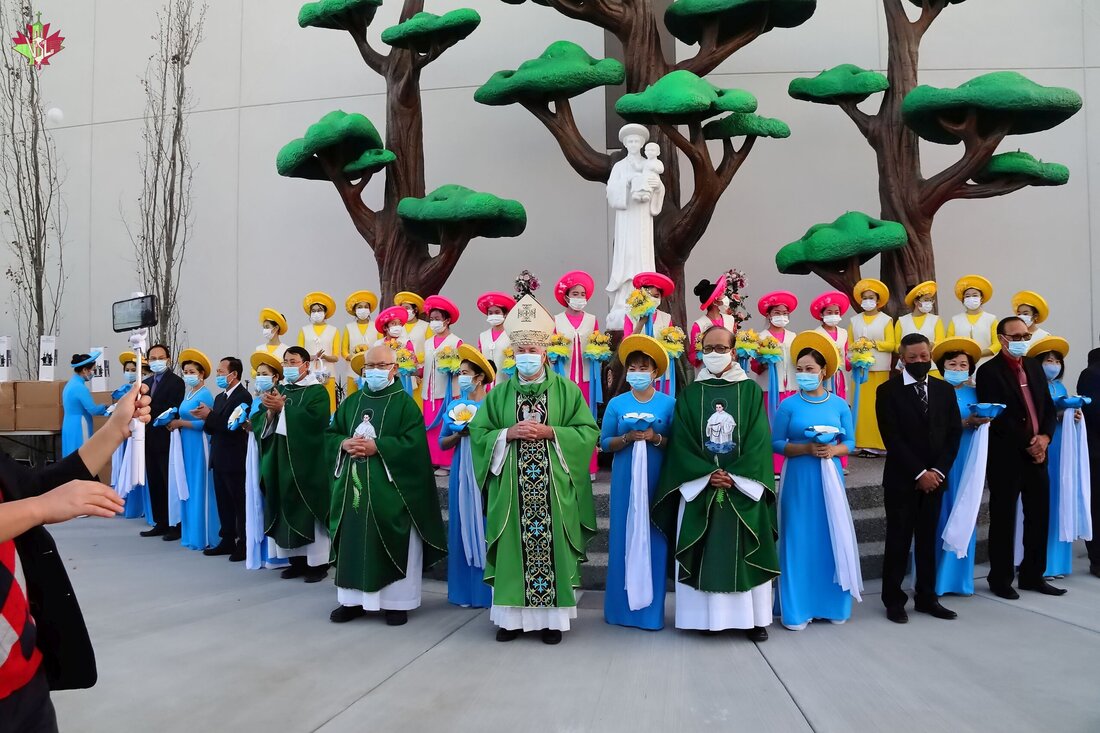
A pilgrimage may cause some frustration or inconvenience... don't complain. Gracefully accept the sacrifice and make it an offering of love. "May you be made strong with all the strength that comes from his glorious power, and may you be prepared to endure everything with patience, while joyfully giving thanks to the Father, who has enabled you to share in the inheritance of the saints in the light." Colossians 1:11-12 A shrine to Our Lady of Lavang in the parish of St. Vincent Liem, Calgary has recently been built and blessed, and is the pride and joy of the Vietnamese community in the city. Fr. Joseph Canh Vu, pastor of St. Francis Assisi parish and former pastor of St. Vincent Liem parish (2009-2017), says the Blessed Virgin Mary is an important part of the Vietnamese Catholic culture and the shrine has become popular for those who want to pray and honour the Holy Mother of God. The shrine is devoted to the story of Our Lady who is said to have appeared many times in Lavang, Vietnam in 1798. “The Vietnamese people are fond of the devotion of the Virgin Mary in Vietnam. Families say the Rosary often before going to bed,” said Father Joseph. “In Vietnam, it’s a tradition to devote ourselves to the Virgin Mary. “The community is very excited. When people come to Mass, or even weekday Mass, they go to say a prayer in front of the shrine.” St. Vincent Liem Church, which is located in the Forest Lawn neighbourhood, was formerly in Inglewood. After years of growth in Inglewood, the Church made the bold move to build a new Church where it is located today at 2412 48th Street SE. The current pastor of the church is Fr. Nguyễn Đức Vượng. The associate pastor is Fr. Phạm Công Liêm. The new church was dedicated on July 11, 2015 by Bishop Emeritus Frederick Henry of the Calgary Diocese. It is known for its grandeur and modern architecture, featuring an open concept, natural lighting, and the versatile design with a touch of the Vietnamese heritage. In the years 2009-2010, the St. Vincent Liem parish in Inglewood began to seriously contemplate building a new Church. The number of people attending Mass was increasing. Parking for the weekend was increasingly becoming more difficult. From 2011 to 2013, the parish began planning the construction of a new Church. On June 15, 2013, the first broken stone officially opened the construction of a new Church in the Forest Lawn area. After the new Church was built, on May 16, 2015, the statue of Our Lady was moved and temporarily placed at the back area of the Church as a place for parishioners to pray. On March 25, the parish held a Mass for the laying of the first stone to inaugurate the construction of the shrine. The project was completed in early October. On Oct. 10, Bishop William McGrattan officially blessed the shrine of Our Lady of Lavang.
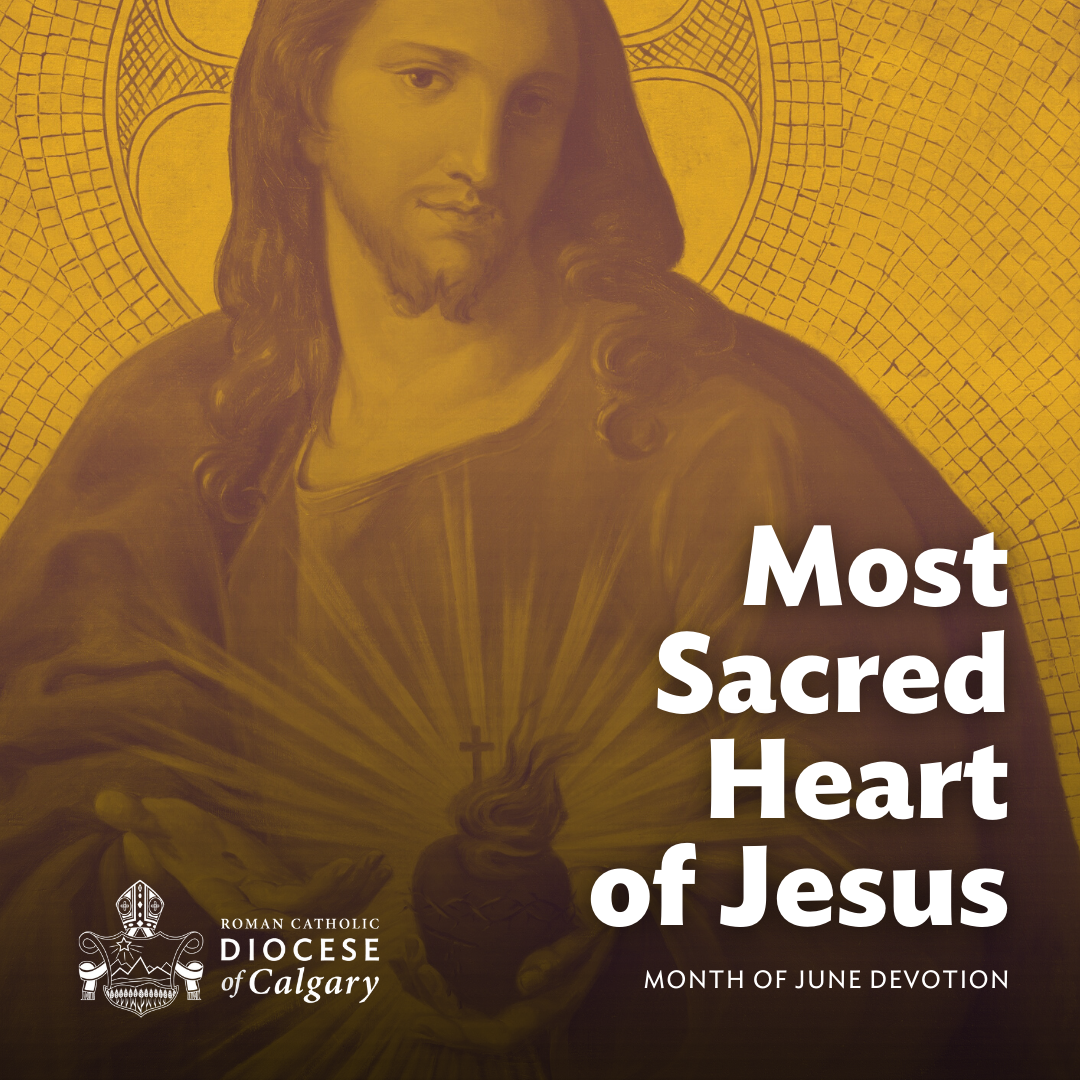
In 1673, St. Margaret Mary Alacoque received a vision of Jesus’ compassionate heart, pierced by the sins of the world, which gave impetus to the devotion of Sacred Heart of Jesus. St. Margaret Mary also received private revelations from Jesus on June 16, 1675. Read more The Church celebrates the Solemnity of the Sacred Heart of Jesus on the Friday following the second Sunday after Pentecost. The term "Sacred Heart of Jesus" denotes the entire mystery of Christ, the totality of his being, and his person considered in its most intimate essential: Son of God, uncreated wisdom; infinite charity, principal of the salvation and sanctification of mankind. The "Sacred Heart" is Christ, the Word Incarnate, Saviour, intrinsically containing, in the Spirit, an infinite divine-human love for the Father and for his brothers. (Directory on Popular Piety and the Liturgy). Sacred Heart of Jesus Resources
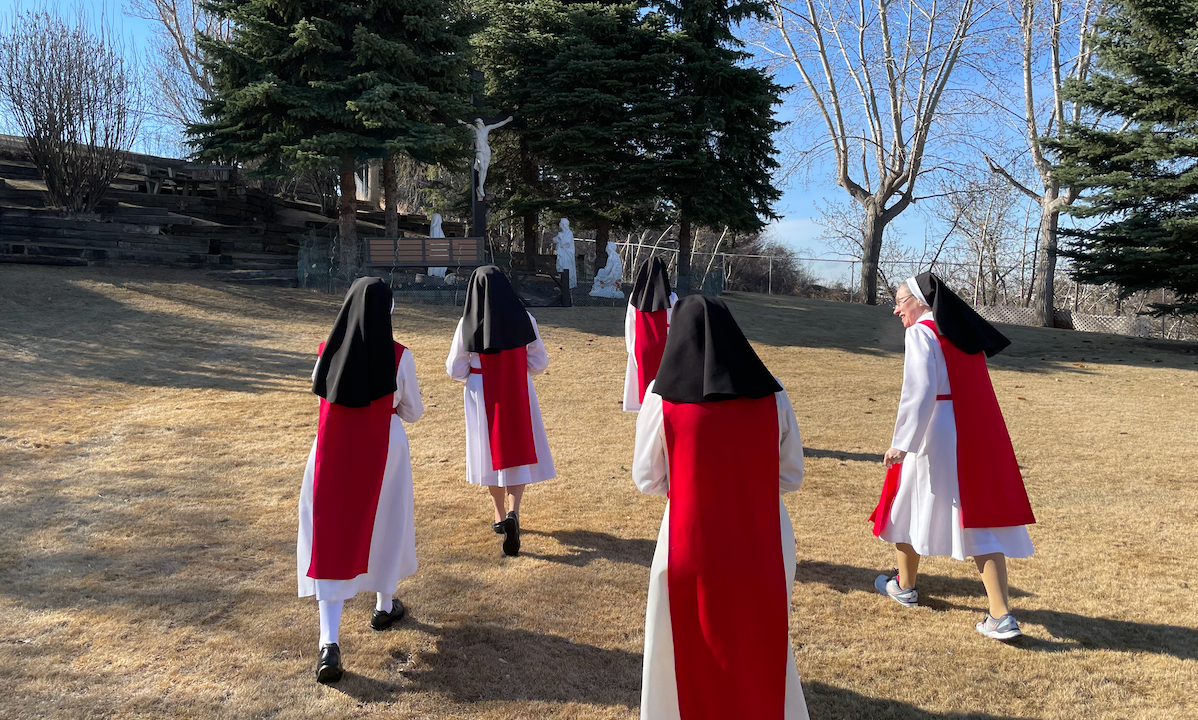
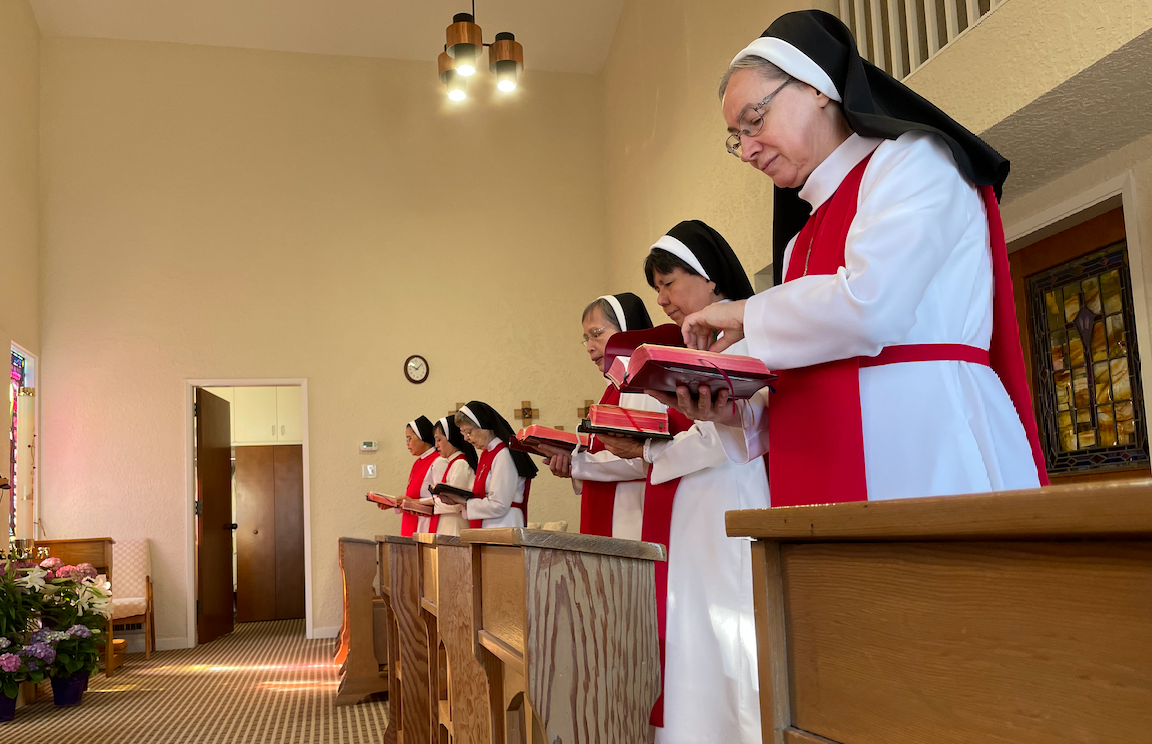
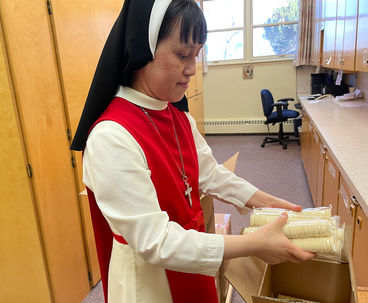
The early-spring sun is barely risen when the six Sisters of the Precious Blood monastery in Calgary make their way to their chapel for morning mass. As the day progresses, the sisters will gather in the chapel four more times to pray the Liturgy of the Hours, an official Prayer of the Church, which sanctifies the day with prayer. Each woman will also spend 30 minutes in private prayer and adoration before the Blessed Sacrament. They use those precious minutes to pray for the needs of the Church, especially the Roman Catholic Diocese of Calgary, and to ask God’s blessing on the world. They also devote that time alone to pray “for the people for whom we’ve promised to pray,” explains Sr. Margaret Nadeau. Many of those prayer requests are posted on the chapel door, a physical reminder that those who live in this cloistered religious community are purposefully devoted to the world from which they’ve chosen to live apart. Altar breads Founded in Quebec in 1861, the Sisters of the Precious Blood was the first contemplative community established in Canada. In addition to the founding monastery in Saint-Hyacinthe, Quebec, the order has houses in Calgary, Regina, London and Hamilton, plus two monasteries in the United States and two in Japan. As well as praying for the people in the communities where they live, the Sisters of the Precious Blood monastery in Calgary plays a tangible role in supporting parishes across the diocese. While the Calgary convent stopped baking altar breads several decades ago, the sisters still receive regular truckloads of hosts baked in the order’s Hamilton house. Once in Calgary, the large cartons are unpacked into smaller boxes of hosts according to the needs of the parishes. Parishes typically pick up these smaller boxes from the monastery, which is located in Erlton, just south of downtown Calgary. Some boxes are also shipped to parishes in other dioceses. The pandemic disrupted this aspect of life in the monastery. While orders for hosts fell in the early weeks of the COVID-19 pandemic, a few parishes in Calgary also were over-supplied. With Calgary’s diocese supporting public health protocols, that extra supply more than sustained the parishes when offering regular masses with fewer parishioners became the norm. “One of the main sources of our income has been the sale and supply of hosts, but demand changed when the pandemic started. Orders are starting to pick up a little now and that’s good as our Hamilton house has hired lay staff and we want to keep them working,” says Sr. Nadeau. A native of Medicine Hat, she joined the Sisters of the Precious Blood 63 years ago this month. “For me, it was a way to embrace the total church in a life of prayer.” Month of the Holy Eucharist All Catholics are called to join that embrace in a special way during the month of April, which is dedicated to the Holy Eucharist. April was chosen because it typically includes Easter Sunday. (Even when Easter falls in March, the entire month of April is part of the Easter season.) The dedication to the Holy Eucharist is a daily commitment for the Sisters of the Precious Blood, whose charism focuses on adoration of the Blessed Sacrament. While some of the order’s houses across Canada could not have daily mass during the pandemic, that wasn’t the case in Calgary. In the early days, Bishop William McGrattan did restrict the list of visiting priests to two individuals. Over time, those restrictions were changed to allow more priests to say mass at the monastery. For now, visitors cannot participate in the holy hour celebration the monastery hosts every Thursday evening. The sisters understand, but miss sharing this special hour of prayers and singing with others in the faith community. “In some ways we’re probably one of the groups of people that has been least affected by the pandemic and for that, we’re grateful,” says Sr. Nadeau. “We live a cloistered life with or without the pandemic and life here goes on every day, with our life of prayer still the biggest thing for us. We just keep on every day, just like we did before.”
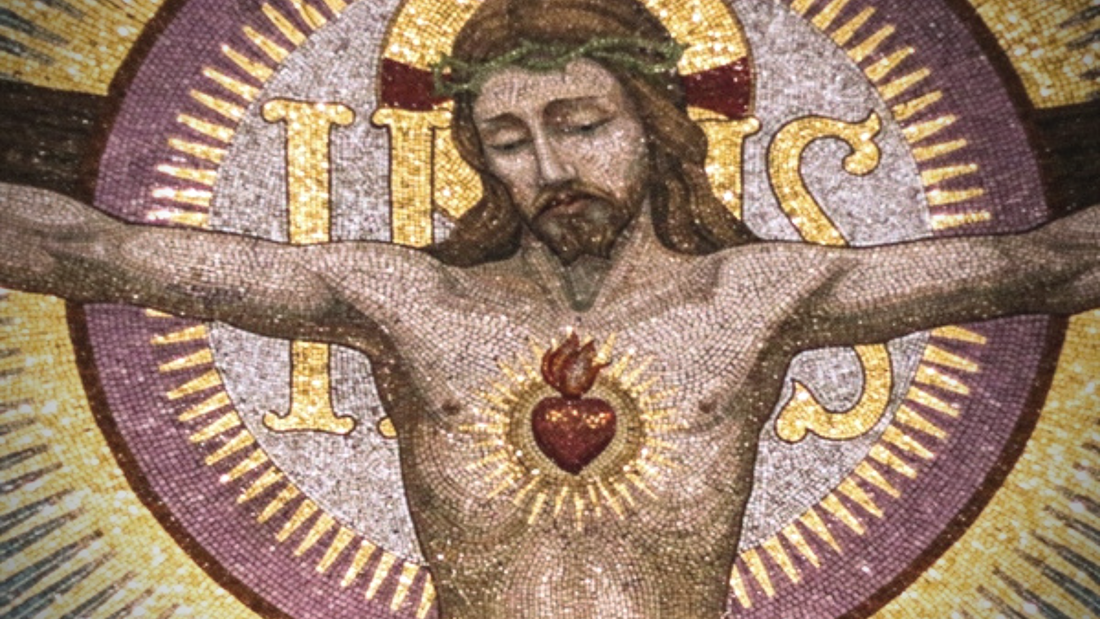
Through the visions St. Margaret Mary Alacoque, devotion to the Sacred Heart became formalized and the feast day extended to the whole Church by Pope Pius IX in 1856. This Friday, celebrate this beautiful feast at home, and receive the blessings and mercy Jesus promised St. Margaret Mary to souls who honour the Most Sacred Heart of Jesus.
Devotions to the Sacred Heart of Jesus are numerous and here are some ways we may be able to observe it this year: |
Author
Catholic Pastoral Centre Staff and Guest Writers Archives
December 2025
Categories
All
|

RSS Feed